Aviation

Lufthansa flies into 100th anniversary year

LUFTHANSA marks a centenary of aviation service on January 6, 2026.

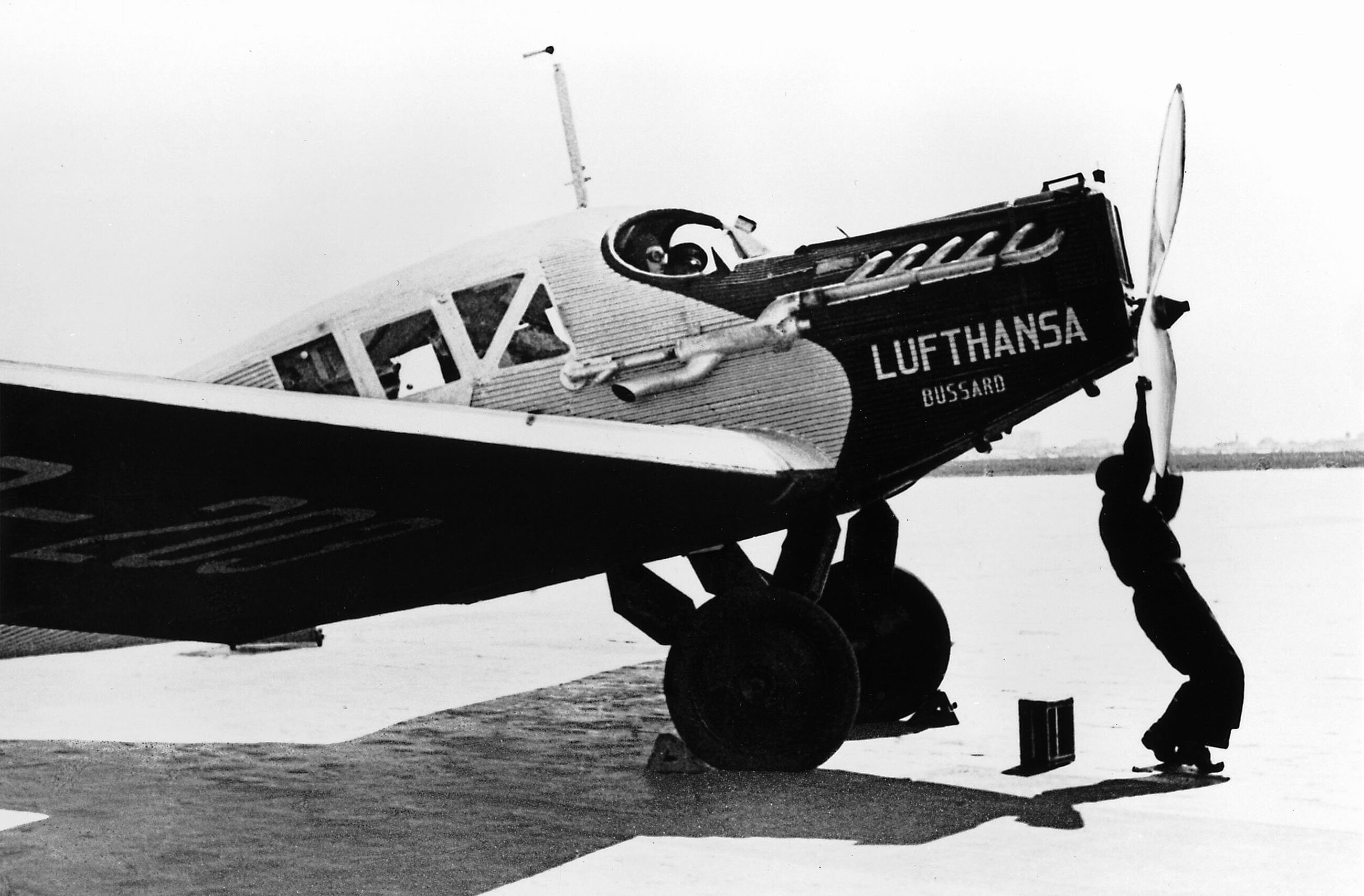
On that day, 100 years ago, the first ‘Luft Hansa’ was founded, and by April 6 of the same year, it had its maiden commercial flight. Australia's national carrier, Qantas, was founded in November 2020.

For Lufthansa today, this anniversary is not only a reflection on the history of one of world aviation’s most iconic brands but also a significant step into the future, with the airline releasing its new livery and uniforms, along with a series of celebrations.

A Lufthansa spokesperson said the celebrations honour the pioneering spirit, innovation, and connection of people, cultures, and economies that Lufthansa has helped shape for a century. 

The story begins with the founding of the first Lufthansa, formed through the merger of Junkers Luftverkehr and Deutsche Aero Lloyd. This fusion laid the foundation for a success story in international aviation that continues to this day.

However, the journey was not always smooth. Lufthansa’s history is marked by challenges, interruptions, and new beginnings, showcasing the company’s resilience and relentless spirit of innovation.

The darkest chapter in Lufthansa’s history was during the Nazi era, when the airline became part of the regime and played an active role within it. Lufthansa is using its 100th anniversary as an opportunity to critically examine its involvement during this time and further address it, based on historical research.

In reflecting on its history, Lufthansa does not limit itself to the post-war chapters. The years from its founding to the downfall of the first Lufthansa are equally part of the company’s story.

With the re-establishment of the ‘second Lufthansa’ in 1953, the legal foundation of today’s Lufthansa was created. Once again, great pioneering spirit was required to embark on a fresh start after the war. In 1955, flight operations resumed, and the journey of the newly founded Deutsche Lufthansa AG began.

The 100th anniversary of Lufthansa is a moment of pride and reflection for the company and and its staff. At the same time, it represents a bold look into the future and the beginning of the company’s second century 

Anniversary motto: ‘We are the Journey’

The anniversary will be celebrated under the motto ‘We are the Journey’ – a message that highlights the shared journey of employees, passengers, and fans of the brand. Since its first flight 100 years ago, Lufthansa has not only written its own history but has also significantly shaped the future of aviation, the spokesperson said.

The anniversary aims to offer a tribute to the guests who have accompanied Lufthansa through a century of challenges, changes, and progress. Without their loyalty and trust, Lufthansa’s success story would not have been possible, the spokesperson said.

“The anniversary is therefore an expression of gratitude to the people who have shaped this journey,” the spokesperson said.

“This especially includes the employees: Lufthansa staff members. Since the company’s founding, they have been united by a unique spirit characterised by pioneering ambition, a passion for flying, and a commitment to excellence.

“Today, 40,000 people from 122 nations work for the Lufthansa brand, and 100,000 people from over 160 nations are part of the group.”

Year of ‘experiences’ planned by Lufthansa

In the anniversary year 2026, Lufthansa will organise a variety of activities and events to honour the history and future of the aviation group. These include a permanent exhibition at the Lufthansa Group Hangar One, special events, a history book, film and video productions, employee celebrations, customer events, as well as marketing and product campaigns. 

The anniversary year will be visible and tangible for Lufthansa customers starting this month. The special ‘100 Years of Lufthansa’ emblem will appear on boarding passes, at airports, and onboard Lufthansa flights in many places.

Outside of airports – for example, in many city centres – a poster campaign will tell Lufthansa’s story through iconic images and messages. 

Flying ambassadors: Lufthansa anniversary fleet

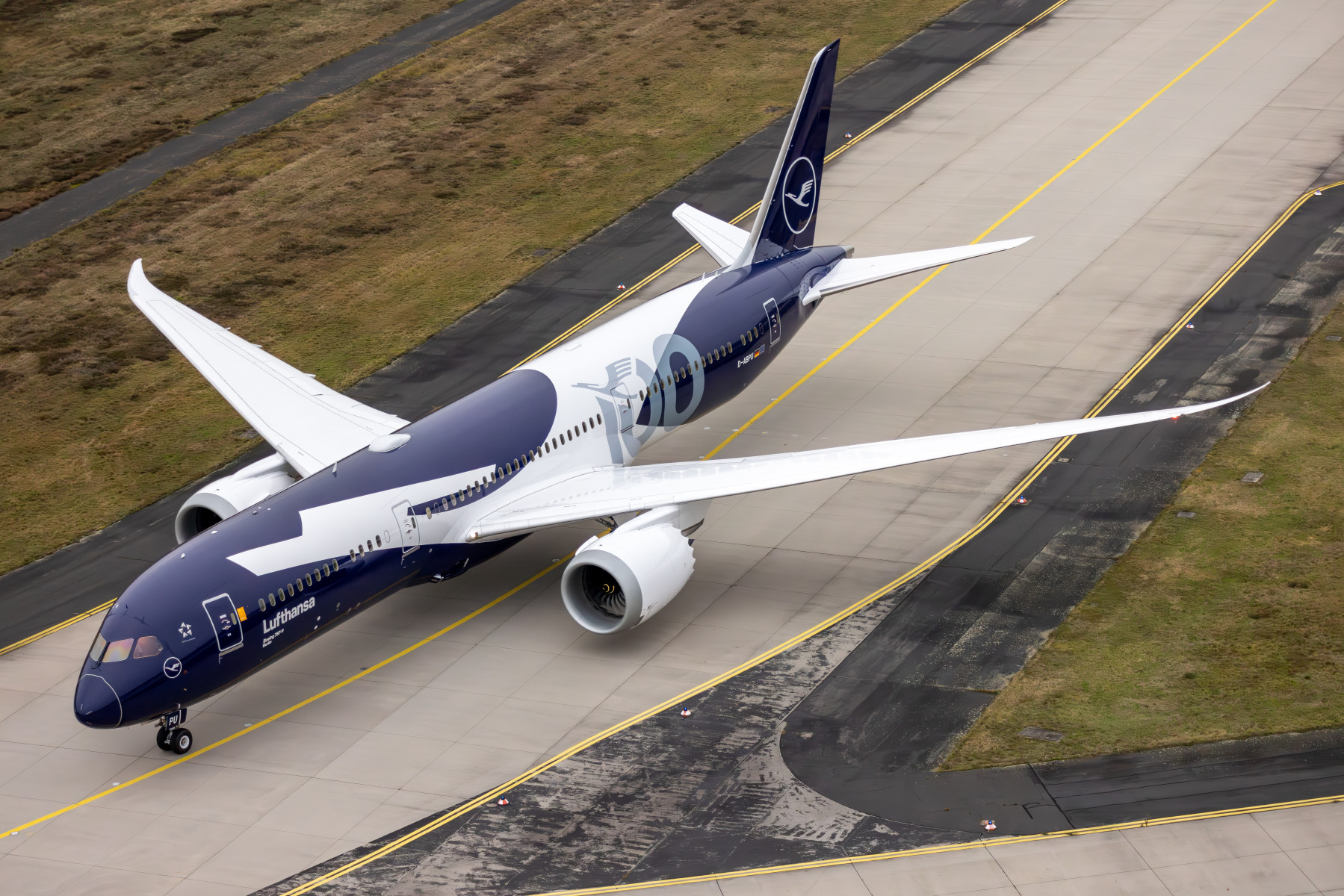
A highlight of the centenary celebrations will be the special aircraft liveries: the key sub-fleets of Lufthansa’s core brand will feature one aircraft with the new 100-year special livery.

The Lufthansa anniversary fleet consists of six aircraft: an Airbus A380, an Airbus A350-1000, an Airbus A350-900, an Airbus A320, and a Boeing 747-8.

Leading the anniversary fleet is the Boeing 787-9 named Berlin, which was delivered from Boeing's factory in Washington State, USA, to Germany shortly before Christmas and landed at its new home airport in Frankfurt.

Soon, this state-of-the-art aircraft, registered as D-ABPU, will enter scheduled service.

Additionally, there will be two retro liveries. These designs combine tradition and progress, making each aircraft a unique flying ambassador of the brand.

The iconic crane, designed by Otto Firle in 1918, remains Lufthansa’s global symbol.

www.lufthansa.com

ends

Carbonix drones revolutionize power grid maintenance

By Leon Gettler, Talking Business >>

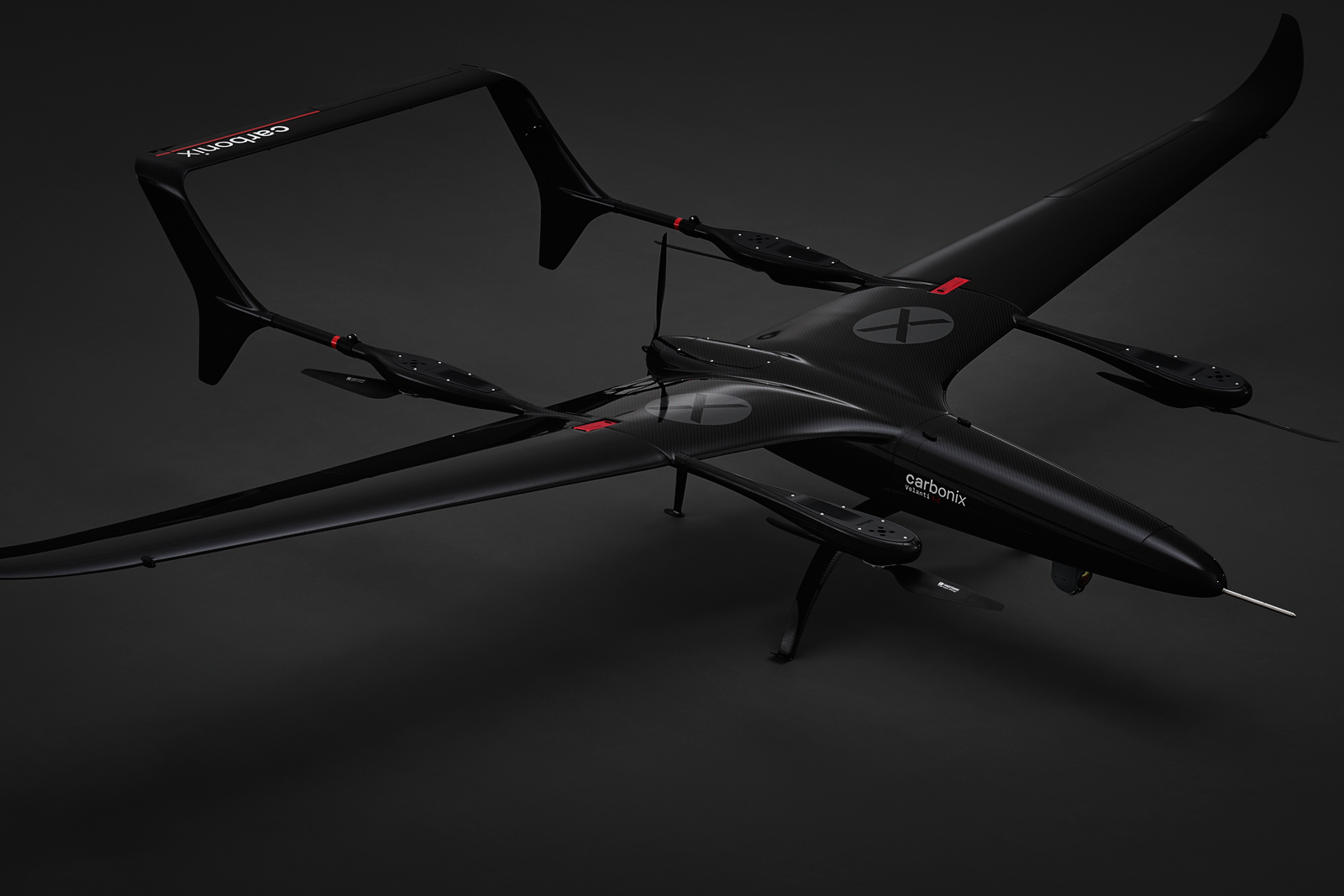
IMAGINE A DRONE that can provide electricity transmission operators with all the details they need for maintenance operations: aerial data capture at scale, carrying high resolution payloads over long distances, producing 3-D models that are accurate and precise.

These drones can look at all the critical infrastructure in real time, providing data on sagging lines and any deterioration of the towers.

All of this is done at a low cost with a small environmental footprint. 

Welcome to the world of Carbonix, a Sydney based start-up that uses drones to help electricity retailers deal with blackouts.

Carbonix founder Dario Valenza said the critical part is that the drone provides the operator with all the details about what’s happening on the ground.

“They are able to see what’s going on, on the ground, around the powerlines, the towers, the conductors, the insulators and they can do that at a lower cost which means they can do it more often, they can do that without sending people out in the field,” Mr Valenza told Talking Business.

“We are able to provide information that can be used for maintenance, prevention, spotting incipient failures, targeting interventions.

 “So the key really is the range of our aircraft and the reliability of our systems.

“What it means is we can cover hundreds of kilometres in a single flight which approximately exceeds what a fixed wing or helicopter can do. We can do it with a much smaller, lighter aircraft that’s cheaper to run and can really go lower and slower and get better data.”

Specs are suited to the task

The drones come with a 6m wing-span which looks like a glider. It’s designed to fly in a stable and it has the ability to take off vertically.  A single flight can do up to 1000km.

As far as carbon dioxide usage goes, it uses up about 2% of a fixed-wing aircraft or helicopter. It has the smallest environmental footprint of any transmission line surveillance system.

“We carry roughly 10kg of fuel and that will give us eight or nine hours of flight,” Mr Valenza said. 

“The fuel tank can fit in your fridge in a drink bottle.

“It is able to fly using so little energy because of the design of the air frame.”

Carbonix uses proprietary methodology for carbon fibre manufacturing which makes the airframe very light and strong, which allows it to carry more weight in terms of payload and fuel.

At the same time, there are restrictions on how many helicopters can be used and their costs. Which is perfect for Carbonix.

Room to broaden geo-scope

Mr Valenza said Carbonix was already planning to expand its business overseas.

“It’s our aim,” he said.

“We have a fleet in the US already. It’s the same problem if you’re flying over a power line in Australia or the US. It’s the same mission, the same job.

“It’s definitely a worldwide market. We’re already in action in the US.

“It’s a common problem. It’s not just powerlines. It’s everything from mines to pipelines, railways, coastal erosion.

“Eye in the sky is a really useful powerful tool. We just fit in that precise high resolution large area part of the picture.”

www.carbonix.com.au

www.leongettler.com


Hear the complete interview and catch up with other topical business news on Leon Gettler’s Talking Business podcast, released every Friday at www.acast.com/talkingbusiness

https://shows.acast.com/talkingbusiness/episodes/talking-business-4-interview-with-dario-valenza-from-carboni


ends

Public Service Assoc. says privatisation of NSW POLAIR threatens community safety

THE Public Service Association of NSW (PSA) has warned that it was "gravely concerned" with recent developments at the NSW Police Force (NSWPF) Aviation Support Command (POLAIR).

Among other cultural and safety issues currently being addressed at POLAIR, the PSA has been made aware of a push towards the privatisation of pilot positions.

This initiative by NSWPF and POLAIR chief pilot Salli-Ann Ward could risk the lives of the community and police, according to the PSA, which represents POLAIR pilots. 

PSA members were advised on Friday, March 10, that six vacant positions -- made up of four rotary aircraft and two fixed-wing -- would be outsourced and filled by contracted staff, privatising these positions which would usually be held by fully trained and qualified special constables.

“Contract pilots lack the experience and specialised training that is provided to Special Constable pilots who up until now have operated NSWPF aircraft,” PSA general secretary, Stewart Little said.

“Special constables are trained to use weapons and to use equipment like bullet proof vests. Without this training and experience, the PSA holds serious concerns that the utilisation of contract piloting staff will lead to a serious incident or accident.

“The circumstances around this initiative are also troubling, there has been no consultation with the PSA, with staff only being notified last Friday about the commencement of contract pilots," Mr Little said.

“There has been no information in relation to whether there was a fit and proper tender process conducted by the NSWPF in awarding the contract for pilot services. 

“There is no information as to how this private company was able to secure these positions and provide services usually performed by members of the NSWPF.

“This lack of transparency or consultation is the norm for current POLAIR management.

“This is privatisation by stealth, it’s the pilots this week, next week it’ll be the engineers who maintain police aircraft," he said.

“These are full time public service roles, the public has an expectation that POLAIR pilots have their mind fully on the job not on moonlighting as skydiving pilots on weekends.

“The PSA position is firm – the government needs to reverse this appalling decision immediately.

“The PSA has sought a meeting with the Commissioner of Police to discuss this matter urgently,” Mr Little said.


ends

H3 Dynamics develops mobile hydrogen filling stations for UAVs

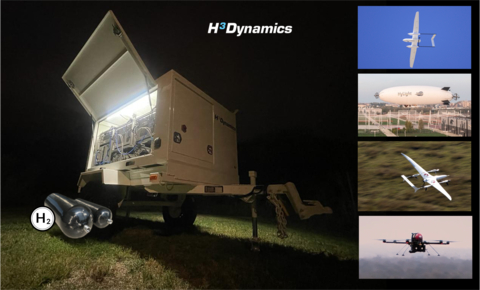
INTERNATIONAL hydrogen-powered aviation group, H3 Dynamics has developed the world’s first mobile hydrogen fuel station for hydrogen drones and UAVs of all shapes and sizes. The mobile stations are branded H2FIELD and they produce hydrogen on site and offer automatic refilling in the field.

The H3 Dynamics solution solves the problem of hydrogen access in remote locations by producing fuel on-site. The automatic storage tank filling system is easy to use and enables 24/7 operations.

Now H3 Dynamics – which has three regional headquarters in Singapore, Toulouse, France and Austin, Texas in the US – is looking to develop larger systems addressing airfield and airport operations.

“We are the evolutionary starting point to increasingly large hydrogen powered flight platforms, where testing, certification and regulatory approval challenges vary based on aircraft weight,” H3 Dynamics CEO and co-founder Taras Wankewycz said.

“We want to mature hydrogen technology in today’s existing uncrewed aviation market – and that includes working out hydrogen logistics and refueling systems.”

The H2FIELD system can service hydrogen-powered airshipsmulti-rotorsvertical take-off and landing UAS and various fixed wing systems.

H2FIELD’s rugged IP-65 trailer-based solution brings hydrogen production to different drone operation locations. It can also be dismounted as a permanent installation and connect to solar panel arrays.

H3 Dynamics can supply various configurations, with slow or fast charge options down to minutes per fill, a spokesperson said, “depending on client requirements”.

“H3 Dynamics’ system is extremely compact and can produce hydrogen on site – not just dispense it from other storage forms,” the spokesperson said.

“For hydrogen drone operators, H2FIELD-1 solves fundamental hydrogen accessibility in remote areas, unlocking a major logistical barrier for a growing base of hydrogen drone operators in industrial, defence, or even academic sectors. The only feedstock input is water.”

H3 Dynamics has been working on a first transatlantic hydrogen-electric flight using liquid hydrogen storage systems currently being tested in France with ISAE-SUPAERO in Toulouse. Last week H3 Dynamics announced its hydrogen propulsion partnership with French airship maker HyLight, and the week prior with Australian VTOL UAV producer Carbonix whose airframes are made by Quickstep, Australia’s innovative aerospace composites producer.

The spokesperson said 2023 would see more of these announcements as H3 Dynamics continues to transition battery-UAS manufacturers to hydrogen technologies.

According to the H3 Dynamics spokesperson, compared with batteries, hydrogen electric systems increase battery-drone flight durations by several orders of magnitude, “opening up many new possibilities in a market that is expected to grow five-fold to $100 billion by 2030”.

H2FIELD-1 marks the start of H3 Dynamics’ foray into hydrogen infrastructure solutions for small, unmanned and increasingly large aircraft, from airfields to airports – with increasingly large output power and hydrogen storage capabilities.

Taras Wankewycz said H3 Dynamics was on a mission to decarbonize aviation. 

“While the commercial opportunities around passenger-scale hydrogen aviation propulsion will take many more years to mature, the company is following a ‘start small’ product and services roadmap that solves safety, technical, regulatory challenges by adding scale, weight and complexity over time.”

The company employs 94 team members from its three regional headquarters in Toulouse, Austin and Singapore. H3 Dynamics is a member of the Alliance for Zero Emission Aviation under the European Commission, Sustainable Aero Lab, the Lufthansa Cleantech Hubthe Paris Advanced Air Mobility Alliance, and Aerospace Valley in Toulouse

www.h3dynamics.com

ends

Brisbane ‘AI-rport’ uses Brainbox to cut emissions

By Leon Gettler, Talking Business >>

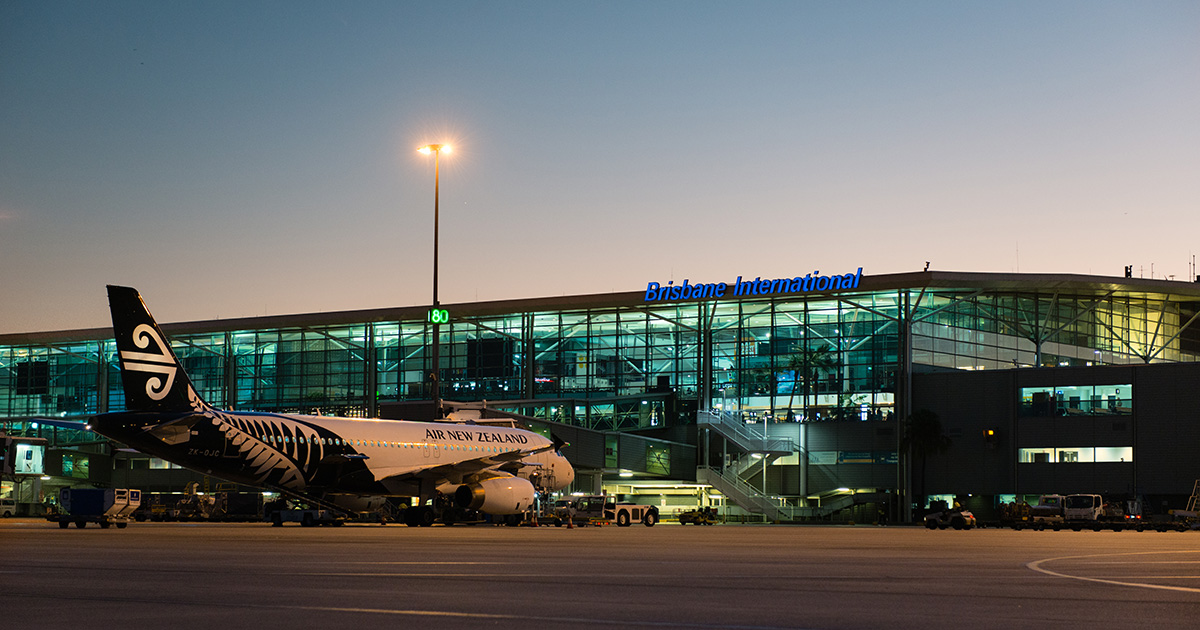
WHAT CAN the world learn from Brisbane Airport? For a start, Brisbane Airport Corporation is the first airport manager in the world to use artificial intelligence (AI), provided by global corporation Brainbox AI, to reduce emissions.

Airports are the second largest emitters of greenhouse gases and the new AI technology allows the airport to focus on reducing emissions in its buildings. The AI can predict internal temperatures of buildings with a confidence interval greater than 95 percent. On some sites, it’s 99 percent.

“Ask yourself, when were you last 99 percent sure of something?”  BrainBox AI head of the Asia-Pacific region, Ben Gill told Talking Business. “So effectively, once we know something is going to happen, we can effectively see into the future and that means we can start turning things off, down or sideways. 

“So without any human intervention, the AI will actually go ahead and make changes to the H-VAC, to your air-conditioning, to your heating in the building and, ultimately, it can do it smarter and quicker than what we can as humans.”

This is important because heating, ventilation and air-conditioning generates up to 70 percent of a building’s energy use in shopping centres and hospitals.


CANADIAN 'NOUSE' BEHIND BRAINBOX

The technology has been developed by the Brainbox team in Montreal, Canada. They include building engineers, software developers, AI architects, (“These guys have brains upon brains,” Mr Gill said) and a data streams team.

He said this technology can be used wherever there are air conditioned buildings. Hospitals and shopping centres would be prime sites.

“When you start to think about the eco-systems that live within these buildings, and the way buildings can actually interact with each other, whether they would ne shade lines, or whether they be shared power, or shared cooling,” Mr Gill said. 

“Something we’re just dipping our toes into now is how these buildings can trade energy with each other. Things like peak demand and sharing those arrangements.”

Mr Gill said cities were now interconnected with traffic and pedestrian movements and the use of energy was now coming to the fore.

“AI will play a role in many aspects of society, pleasingly in reduction of emissions,” he said.

He said Brainbox was now operating in most states around Australia, except for Tasmania. It is also operating in Canada and North America and pushing into Asia


AIRPORT SHOWS BRAINBOX VERSATILITY

Mr Gill said it was significant that Brainbox was now using its technology on an airport.

“We know we have proven technology in commercial buildings, in office towers. We know it in shopping centres, we know it in universities, we know it in schooling,” he said.

“This is the first time we have seen an airport operator do it. Sometimes it comes down to less about the building and more about the attitude of people.

“Ultimately, we are asking people to give up a little bit of control in what they’re doing and let the AI make decisions,” Mr Gill said.

“Part of my job and my team’s job is putting in place the procedures and also the trust and the confidence.”

Mr Gill compared data with water.

“It’s often dirty, it needs filtering, it needs sanitisation, it certainly needs plumbing, you need to have storage for it,” he made the analogy.

www.brainboxai.com

www.leongettler.com  


Hear the complete interview and catch up with other topical business news on Leon Gettler’s Talking Business podcast, released every Friday at www.acast.com/talkingbusiness.

https://play.acast.com/s/talkingbusiness/talking-business36-interview-with-ben-gill-from-brainboxai

ends

Australia’s Monarc Global partners with UK’s Aviation Data Solutions

TWO INDUSTRY-LEADING aviation technology software companies, Monarc Global, based in Australia, and Aviation Data Solutions (ADS), based in the UK, have announced a strategic partnership.

Monarc Global's in-house Travech pricing technology provides solutions to aircraft operators and owners, including a global distribution system for the travel industry. ADS’s Airport Pricing Calculator is the aviation industry’s go-to for sourcing the most accurate airport and handling agent costs in the UK, Europe and, soon, worldwide.

Combined, ADS will utilise Travech’s instant and accurate private charter booking capabilities, and Monarc Global will have access to ADS’s ever expanding pricing coverage.

According to Monarc Global CEO Royce Crown, the new partnership will see both companies’ products and services deliver “real-time, accurate and instantaneous airport calculations and pricing for aircraft operators, owners and the travel services industry”. 

“We are pleased to reveal this partnership with ADS, one of the world’s best for providing accurate data for the aviation industry,” Mr Crown said. “We wanted to work with a company that mirrored our company’s product and service quality and, when joined together, both would provide a stronger and elevated service and outcome for our clients.

“This is another step for us in introducing Travech to an international market. We see this very much as a symbiotic partnership; because it fits perfectly with what we are trying to achieve,” Mr Crown said.

ADS has an impressive list of more than 800 services, 1400 unique service calculation methods and over 900 aircraft types, variants and engine combinations modelled with all certified business aviation types covered.

The ADS map of pricing coverage is an ever expanding and updating network of airports and handling agent brands. Notable examples include United Aviation, Omni handling and Argos VPH.

“This partnership with Monarc Global is a fantastic landmark for ADS and the way forward to bringing simplicity and transparency into the complex world of charter booking and sales,” ADS managing director Adrian Parsons said.

“At ADS, we are all about quality and accuracy to the highest standard. We believe that working together with Monarc Global, who closely echo our own business values, will elevate our combined services to a whole new level.”

Next month, representatives from both companies will come together for their new partnership at the European Business Aviation Convention and Exhibition (EBACE 2022).

https://aviationdata.aero

www.monarcglobal.com

ends

Monarc Global takes double win in Deloitte’s Tech Fast 50 Awards.

AVIATION technology software company Monarc Global took home a double win at the recent 21st Deloitte Technology Fast 50 Awards. Monarc Global was named the Tech Fast 50 Winner and company co-founder Monica Zagrodny won the Female Leadership Award.

It marks the first time in the history of the Deloitte Tech Fast 50 Awards that a nominee has won in two categories.

The awards pinpointed 50 of Australia's fastest-growing companies, with the list’s cut-off rate rising above 300 percent. Monarc Global saw a phenomenal growth of 6,331 percent between 2019 and 2021 and, as a result, was recognised as the Fastest Growing Tech Company in Australia.

Monarc Global is an aviation-centric software company providing solutions via its in-house technology, branded Travech, to aircraft operators and owners, including a global distribution system for the travel industry.

Monarc's innovative product and service in the aviation and travel space was what set it apart in both the Fastest Growing Tech Company in Australia category and for the Technology Female Leadership Winner. 

“I am honoured to win Deloitte's Technology Fast 50 Female Leadership Award,” Monica Zagrodny said. “To be included amongst a list of other female lead companies is a testament to the amazing work we are all doing and a great step towards giving female leaders opportunities and recognition in business acumen within their industry.

“This is a fantastic achievement for our team, since its inception in 2017 and armed with our mission to provide solutions for aircraft operators and owners and change the aviation industry to do better when it comes to business operations, particularly automated pricing,” Ms Zagrodny said.

“Monarc Global is part of a wider landscape of other companies and founders who are paving the way for promising innovation within Australia. Thank you to all the nominees on the list, the entire Monarc Global team and all of our supporters.”

In the past, companies such as Afterpay, Vinomofo, Seek, Realestate.com.au, Atlassian and Webjet have taken out the top spot.

Since 2017, Brisbane-based Monarc Global has helped aircraft owners, charter operators, travel services, and airlines automate their pricing and booking systems with their dynamic in-house built pricing software, Travech.

www.monarcglobal.com

ends