TPL_YOOTHEME_SKIP_TO_MAIN_CONTENT

Sports Business

Australian Sports Technologies Network and Australian Sports Tech Co. kick off seed capital fund for start-ups

THE Australian Sports Technologies Network (ASTN) and the Australian Sports Tech Company have launched an investment fund to assist start-ups in the sports technologies design and manufacturing sector.

The organisations have called for expressions of interest from early stage sports technology businesses for seed capital. 

Through the alliance, the Australian Sports Tech Company has become a key investor in the Australian sports technologies industry. The Australian Sports Tech Company is an Australian-based investment company with strong existing global links in sports and technology. 

“This is a pivotal point in the development of the Australian sports technologies industry,” ASTN executive director, Craig Hill said.

“The ability to attract an investor with both an interest in Australian sports tech along with a global reach is exactly what our industry needs to support high-potential, scalable start-ups. It also validates the work and direction that the ASTN has been building with its members over the past three years.”

The Australian Sports Tech Company director John O‘Connor said, “We are very excited to be able to back start-ups in the Australian sports tech space. We have a very optimistic view that with a mixture of initial seed funding and our global reach – together with solid mentoring and connection programs – that selected start-ups will be in a sound position for the potential to attract follow on funding from us in the very near future.

“The decision to invest in the industry is well-founded  based on the number  of quality start-ups  with real opportunity to quickly scale to global application.”

Expressions of interest close on May 3 at 5pm.

http://astn.com.au/key-activities/startup-investment-eoi/


ends

Infiniti Red Bull Racing F1 team partners with Chinese electronics manufacturer Hisense

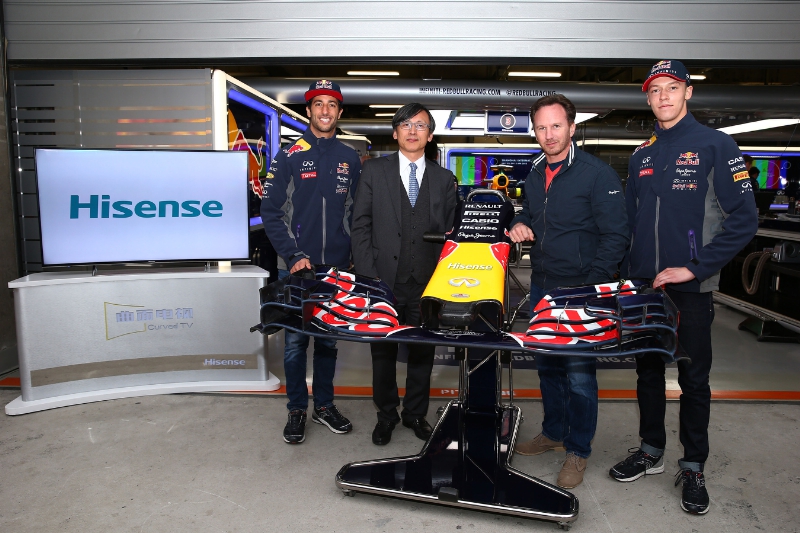
HISENSE, the Chinese electronics manufacturer escalating its global reach, has announced a multi-year partnership with Formula One’s Infiniti Red Bull Racing team.

The announcement was made at the Shanghai International Circuit ahead of the Chinese Formula One Grand Prix and complements Hisense’s sponsorship programs in the USA with NASCAR, The Australian Open tennis tournament and Schalke 04 football team in Germany. 

Infiniti Red Bull Racing said as part of the agreement, Hisense's logo would feature on the nose of the RB11, on the team's pit wall and driver monitors, as well as on all team partner listing areas.

“Infiniti Red Bull Racing is one of the most successful and most talked about teams in a sport renowned for technology, teamwork and competitiveness,” Hisense Company Ltd executive vice president  Lan Lin said.

“Like Infiniti Red Bull Racing, we are a proud challenger brand and we continually innovate our best-in-class consumer products to stay ahead of the others.  We look forward to sharing these with the team to help them throughout the season,” Dr Lin said.

Infiniti Red Bull Racing Team principal, Christian Horner said, “Everyone associated with Infiniti Red Bull Racing is delighted to welcome Hisense to our team. Their approach to innovation and technological development is impressive and we look forward to our partnership developing as the season unfolds.”

Hisense is reportedly the top television manufacturer in China , a position it has maintained for 11 consecutive years. Through this new partnership Hisense announced it was looking to become the third most popular global TV brand, one place higher than last year.

In 2017, Hisense aims to reach a total revenue of US$7.5 billion internationally and the F1 partnership includes Hisense’s cutting edge range of consumer electronics products will be supplied to the team both at track and in the factory. 

www.hisense.com.au

www.infiniti-redbullracing.com

ends

Budget 24-hour gyms thriving - IBISWorld reports

EXTRA >> THE key growth segment in Australia’s gymnasium industry at the moment is the 24-hour operation – but traditional gyms are fighting back.

Overall, according to research from IBISWorld, the gym and fitness centres industry continues to grow at a rate of 3.3 percent a year and is currently worth about $1.3 billion. 

The 24 hour gyms – which do not typically provide classes to members, but offer all-hours access, lower prices and flexible membership plans – are a key growth segment as identified by IBISWorld.

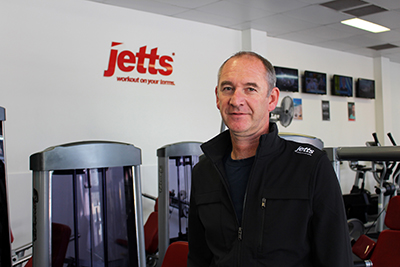
The most popular establishments in the sector include Anytime Australia, Jetts Fitness and Snap Fitness. Full-service gyms are beginning to fight back against this fierce competition by reducing prices, offering more flexible contracts and providing special services.

The concept of 24-hour gyms is not new, but consumer preference for the price and convenience of these establishments has grown rapidly. Two 24-hour gym chains, Anytime Fitness and Jetts Fitness, have aggressively expanded their networks, and now have about 600 locations between them.

These types of gyms require less space than full-service gyms, as they do not offer classes, which means reduced rental costs and a greater number of suitable locations. Low wage costs, due to the facilities being unstaffed for some hours during the day, allow these gyms to reduce their prices even further.

Strong growth in the number of 24-hour gyms has come at the expense of full-service gyms, causing the revenue and market share of major player Fitness First Australia to decline over the past five years.

In response to this fierce competition, some full-service gyms have begun to engage in price wars with 24-hour gyms. Many full-service gyms now provide a range of contract options, with different durations and prices.

These gyms still depend on high volumes of customers to remain viable, as they cannot compete with 24-hour gyms in terms of rent and wage costs.

Full-service gyms are also employing other strategies to lure consumers back, like providing women-only training areas. While this strategy is not expected to affect 24-hour gyms, it may take market share away from women-only gyms like Fernwood Women’s Health Clubs and Curves.

The IBISWorld report suggested as competition between full-service and 24-hour gyms intensifies, an overall rise in the number of members will be offset by declining prices.

Looking towards 2015-2020, this is expected to lead to an annualised fall in industry revenue of 0.5 percent.

“In a highly saturated market with limited room to expand further, the continuing trend of consumers switching over to 24-hour budget gyms, or taking advantage of cheaper memberships due to the price war, will lead to a revenue contraction in the gyms and fitness centres industry,” an IBISWorld spokesman said.

www.ibisworld.com.au

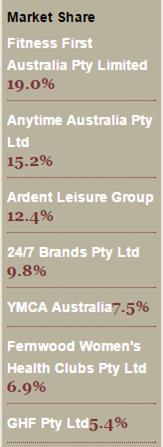
Current market share: 2014


Relevant industries include: Gyms and Fitness Centres, Women’s Gyms

3D printing, modelling to Disrupt Surfing

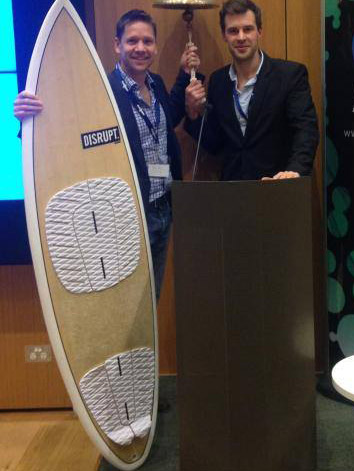
EXTRA >> TWO University of Sydney Business School MBA students, Gary Elphick and Jason Rogers, have taken the surf sports market by storm with an innovative new business concept which allows customers to affordably customise their surfboards.

Disrupt Surfing is one of a growing number of enterprises dispensing with the traditional business model of designing products in a studio, manufacturing them in a factory and displaying in a store. 

Instead, Disrupt offers an online service allowing customers to design products according to their desired size, shape and colour. Using the latest technology, Disrupt Surfing creates three-dimensional (3D) renders of the customer’s desired board which are then used in the manufacturing process.

“3D printing, modelling and manufacturing are going to revolutionise the way the world thinks of their sports gear, you should never have to settle for anything less than exactly what you want,” said Disrupt Surfing co-founder, Gary Elphick.

The company has been in operation for only eight months and is already cash flow positive, selling more than 1000 products to happy customers from as far as the US, Kenya and Japan.

A large part of the success has come down to an astute and engaging website that not only provides an easy path to design and manufacture, it also has a high-touch approach including online live help on a personal basis, often linking with the owners of the business themselves.

So successful is the start-up venture that Mr Elphick and Mr Rogers are now extending their customisation to other sports lines such as kite surfing, snowboarding and stand-up paddle boards.

“The level of customisation we are able to provide is almost limitless,” said Mr Rogers said. “You can visualise a customer’s character through how they personalise their sports gear – a shark proof surf board, a leopard skin print snowboard or a bumblebee stand-up paddle board, it says a lot about a person.

“Our sports gear is made in the same location, using the same materials and engineering as many big surf brands. We only sell online and ship direct. We offer 100 percent customised boards at 50 percent of the cost,” he said.

Mr Elphick and Mr Rogers attribute much of the success of their start-up to the practical nature of their MBA course.

They said learning from experienced business professionals about leading teams, managing a business, and seizing opportunities has helped them avoid the pitfalls a lot of start-ups face. The course also encouraged the duo to be progressive leaders.

“People are either going to love us or hate us, it’s a very polarising concept especially for traditionalists and traditional retailers,” Mr Elphick said. “You can expect to see a lot of commentary.”

www.sydney.edu.au

www.disruptsurfing.com


ends

Australian-made innovative horse racing helmet to set global protection standard

EXTRA >>

IMPROVING safety for professional jockeys around the world is the impetus for the collaborative development of an Australian designed and manufactured helmet.

A prototype of the new safety helmet – Albion’s ‘Coonan and Denley’ racing helmet – was released at a critical time for the racing industry, in the wake of two promising young jockeys, Caitlin Forrest and Carly-Mae Pye suffering tragic and fatal falls in October and champion riders Desiree Gill and Simone Montgomerie in late 2013.

Every year nearly 500 jockeys in Australia suffer a fall, according to the National Jockeys Trust. Around 330 will have a fall which prevents them from racing for an average of five weeks, while on average 16 jockeys will suffer a career-ending injury. There have been 313 jockeys killed in race falls in Australia since the profession began. Currently, about 5000 professional jockeys ride nationally.
META, a collaborative network of manufacturers and researchers, in partnership with the Australian Sports Technologies Network (ASTN), local sporting goods company Albion Sports and leading researchers from RMIT, launched their first collaboration at Flemington Racecourse recently – a gold-standard safety helmet prototype, pioneering safety in the horse racing and equestrian industries.

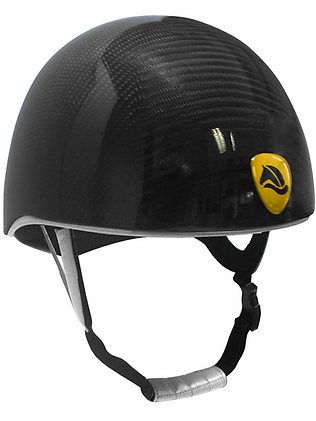
The META and Albion collaborative prototype helmet has been designed specifically to better absorb and spread impact across the head injury spectrum, reducing the risk of injury from a fall, kick or knocks to the head. The Albion Coonan and Denley racing helmet will undergo extensive testing that will replicate speeds of up to 60 kmh, equivalent to thoroughbred racing conditions, as part of Australian Racing Board racing regulation.

Champion jockey Craig Williams said jockeys require greater protection because of the dangers associated with their sport.

“Racing is one of the most dangerous sports in the world and jockeys have sustained serious injuries through high performance competition,” Mr Williams said.

“We need to ensure the safety of athletes involved in the sport and prevent the kinds of incidents we’ve seen recently from occurring. It’s great to see an Australian company taking the lead in protecting our jockeys.”

Albion CEO Brendan Denning said the helmet sets the standard for jockey safety and provides greater confidence for jockeys to focus on racing.

“The helmet is made with carbon fibre and is enhanced with additional materials, along with new foam technology which provides superior protection for jockeys,” Mr Denning said.

“Early results thus far indicate the performance benefits from the helmet will significantly decrease the likelihood of serious injury at both ends of the injury spectrum, from high speed, high impact injuries, to lower speed barrier knocks which can result in concussion for riders.

“We had been working on an advanced racing helmet for about three years and progressed to the stage of manufacturing but couldn’t get the manufacturing consistency from our overseas partners,” Mr Denning said.

“The support from META has allowed us to partner with local suppliers and manufacturers who we were unaware of prior to our involvement in the hub. It allowed us to upgrade the technology to the point where we are well and truly industry leaders in sports safety.”

META co-funded research and development of the helmet, the first project completed under the auspices of the META Sports Advanced Manufacturing Hub. Launched in July this year, the Hub connects manufacturers and the sports industry to create new and innovative products leveraging Australia’s outstanding research and technical ability in manufacturing.

META chairman Albert Goller said the helmet was an example of how Australian manufacturers were pioneering collaboration between industry and research to produce global-first products.

“Australia is a leader on the sports field and we want to ensure we are also a leader in sports manufacturing and technology,” Mr Goller said. “This helmet proves demonstrates the capability of manufacturers working closely with researchers to create a world-class and unique product that we can export to the world.

“Through the success of the Advanced Sports helmet, we hope to promote Australian sports manufacturers internationally and raise our profile as elite high-tech sports protection specialists.”

ASTN chairman James Demetriou said a number of other Hub projects were in the pipeline.

“Australia currently imports $2 billion in manufactured sports products and exports just $286 million worth of product,” Mr Demetriou said.

“The Albion helmet, designed and manufactured here in Australia, will help balance the equation, as will future projects resulting from the Sports Advanced Manufacturing Hub.”

The Hub will continue to allow industry participants to identify opportunities and then enable transition to the mass sports consumer markets.

The Albion ‘Coonan and Denley’ racing helmet is currently with the Victorian Racing Council (VRC) for approval as the preferred choice for all VRC events.

Australian manufacturers are being invited to participate in the Sports Advanced Manufacturing Hub.

www.meta.org.au

Australian-made horse racing helmet to set global protection standard

IMPROVING safety for professional jockeys around the world is the impetus for the collaborative development of an Australian designed and manufactured hi-tech helmet.

A prototype of the new safety helmet – Albion’s ‘Coonan and Denley’ racing helmet – was released at a critical time for the racing industry, in the wake of two promising young jockeys, Caitlin Forrest and Carly-Mae Pye suffering tragic and fatal falls in October and champion riders Desiree Gill and Simone Montgomerie in late 2013.

Every year nearly 500 jockeys in Australia suffer a fall, according to the National Jockeys Trust. Around 330 will have a fall which prevents them from racing for an average of five weeks, while on average 16 jockeys will suffer a career-ending injury. There have been 313 jockeys killed in race falls in Australia since the profession began. Currently, about 5000 professional jockeys ride nationally. 

META, a collaborative network of manufacturers and researchers, in partnership with the Australian Sports Technologies Network (ASTN), local sporting goods company Albion Sports and leading researchers from RMIT, launched their first collaboration at Flemington Racecourse recently – a gold-standard safety helmet prototype, pioneering safety in the horse racing and equestrian industries.

The META and Albion collaborative prototype helmet has been designed specifically to better absorb and spread impact across the head injury spectrum, reducing the risk of injury from a fall, kick or knocks to the head. The Albion Coonan and Denley racing helmet will undergo extensive testing that will replicate speeds of up to 60 kmh, equivalent to thoroughbred racing conditions, as part of Australian Racing Board racing regulation.

Champion jockey Craig Williams said jockeys require greater protection because of the dangers associated with their sport.

“Racing is one of the most dangerous sports in the world and jockeys have sustained serious injuries through high performance competition,” Mr Williams said.

“We need to ensure the safety of athletes involved in the sport and prevent the kinds of incidents we’ve seen recently from occurring. It’s great to see an Australian company taking the lead in protecting our jockeys.”

Albion CEO Brendan Denning said the helmet sets the standard for jockey safety and provides greater confidence for jockeys to focus on racing.

“The helmet is made with carbon fibre and is enhanced with additional materials, along with new foam technology which provides superior protection for jockeys,” Mr Denning said.

“Early results thus far indicate the performance benefits from the helmet will significantly decrease the likelihood of serious injury at both ends of the injury spectrum, from high speed, high impact injuries, to lower speed barrier knocks which can result in concussion for riders.

“We had been working on an advanced racing helmet for about three years and progressed to the stage of manufacturing but couldn’t get the manufacturing consistency from our overseas partners,” Mr Denning said.

“The support from META has allowed us to partner with local suppliers and manufacturers who we were unaware of prior to our involvement in the hub. It allowed us to upgrade the technology to the point where we are well and truly industry leaders in sports safety.”

META co-funded research and development of the helmet, the first project completed under the auspices of the META Sports Advanced Manufacturing Hub. Launched in July this year, the Hub connects manufacturers and the sports industry to create new and innovative products leveraging Australia’s outstanding research and technical ability in manufacturing.

META chairman Albert Goller said the helmet was an example of how Australian manufacturers were pioneering collaboration between industry and research to produce global-first products.

“Australia is a leader on the sports field and we want to ensure we are also a leader in sports manufacturing and technology,” Mr Goller said. “This helmet proves demonstrates the capability of manufacturers working closely with researchers to create a world-class and unique product that we can export to the world.

“Through the success of the Advanced Sports helmet, we hope to promote Australian sports manufacturers internationally and raise our profile as elite high-tech sports protection specialists.”

ASTN chairman James Demetriou said a number of other Hub projects were in the pipeline.

“Australia currently imports $2 billion in manufactured sports products and exports just $286 million worth of product,” Mr Demetriou said.

“The Albion helmet, designed and manufactured here in Australia, will help balance the equation, as will future projects resulting from the Sports Advanced Manufacturing Hub.”

The Hub will continue to allow industry participants to identify opportunities and then enable transition to the mass sports consumer markets.

The Albion ‘Coonan and Denley’ racing helmet is currently with the Victorian Racing Council (VRC) for approval as the preferred choice for all VRC events.

Australian manufacturers are being invited to participate in the Sports Advanced Manufacturing Hub.

www.meta.org.au

Jetts power up Australian-first Velocity partnership

JETTS has extended its reputation as an innovator in the fitness industry by entering into a ground-breaking three-year partnership with Virgin Australia’s loyalty program, Velocity Frequent Flyer – including a massive loyalty points offer for new Jetts franchisees.

The Australian-first partnership sees Jetts become Velocity’s first official fitness partner, enabling members to earn points through Jetts Fitness. 

The partnership will also generate the largest Velocity frequent flyer points earn opportunity available in the market – Velocity Platinum, Gold or Silver members who purchase a Jetts franchise will earn 500,000 bonus points.

Benefits for Velocity members will include the ability to earn two points for every dollar spent on Jetts’ membership payments and one-off club access fees. Jetts members who visit a Jetts gym five or more times each month will also earn 60 bonus Velocity points.

Jetts CEO Martin Oliver said the decision to partner with Velocity was the result of 12 months of planning and discussions.

“We want to put our members’ needs first to ensure they continue to get the most out of their membership,” Mr Oliver said. “By partnering with a leading Australian loyalty program like Velocity Frequent Flyer, we can ensure Jetts members’ experience continues to be nothing but rewarding.”

Velocity Frequent Flyer general manager, Sid Gokani said, “This Australian-first partnership is another example of the program’s ongoing quest to add meaningful partners and reward its members on everyday spend.

“At Velocity, we are proud to provide members with an extensive portfolio of partners across a range of categories, and from today, this will include our first fitness partner.

“We recognise the importance of health and well-being to our members and we are thrilled to welcome Jetts to the program, offering the ability to earn while you burn so to speak,” Mr Gokani said.

Velocity Frequent Flyer members who join Jetts, during the launch offer period to November 30, will receive 3,500 bonus points when purchasing an annual membership, or 750 bonus points on their first Freedom direct debit payment.

Points can also be redeemed for a one month membership and an advance 12 month membership on the Velocity Online Rewards Store.

Mr Oliver said the Velocity partnership further solidified Jetts’ position as the number one fitness chain in Australia for customer satisfaction “and Australia’s leading 24/7 fitness group”.

Jetts currently operates more than 250 clubs across Australia, New Zealand and the Netherlands.

Jetts was established in 2007, leading with the major points of difference of having round-the-clock, seven-days-a-week access to its fitness clubs and no lock-in contracts.

www.velocityfrequentflyer.com

www.jetts.com.au

ends