Training & Careers

Women accountants call for greater workplace support: study

WOMEN accountants are calling for greater workplace support, and a better culture to improve their mental health and engagement at work.

A new study by Monash Business School researchers, Carly Moulang and Alessandro Ghio from the Department of Accounting, found women’s presence in senior leadership remained low and accounting firms were facing difficulties in retaining them.

The research team set out to uncover why women dropped out in the middle of their career in professional service firms. A report by the Workplace Gender Equality Agency into gender equity found that despite women making up 48 percent of employees in the finance and insurance sectors, just 37 percent of them hold full-time management positions. 

Undertaking a survey of 203 women and conducting 31 in-depth interviews, researchers looked at supporting practices for women certified accountants from across Australia – including a broad cross-section of women from diverse backgrounds, demographics, ages and seniority in both urban and rural areas.

Associate Professor Moulang said survey respondents wanted to see more women in senior positions to inspire others to follow suit, and have male partners advocate for them and model greater workplace flexibility.

“Leadership support is key in order to advocate workplace change. There was a real call for more part-time positions with more leadership roles available to be done part-time. The ability to share roles is also on their wish list,” Associate Professor Moulang said.

Associate Professor Moulang said many women experienced work-life balance struggles despite the policies being in place for them to take time off work – in reality, they are unable to take the time when they need it.

“The crazy thing is that in many workplaces, while women may have plenty of time accrued, it’s not possible for them to take breaks until the project is finished. Doing so is seen as a ‘career suicide’ move. A consequence of this is that many women professionals then experience burnout,” Associate Professor Moulang said.

“One respondent spoke of the wellness days on offer at her workplace, but they were only available once the work was completed. This was often too late as burnout was already there. In many instances, women commented that burnout is ‘expected’ in their workplace, rather than something their workplaces try to avoid.

“The consequences of this approach have been devastating for many women, and have resulted in both psychological and physical repercussions, including hospitalisations."

Another woman told researchers: “When I first went back to work after my child, I was in a Big4, and that’s why I left. It’s because it didn’t matter if it was my day off or not, if it was month-end then I’d be expected to turn work around and work on that day.”

Dr Ghio said surprisingly, many women revealed they had to moderate their own behaviours, particularly in situations where they were the only woman in a meeting or on a committee. 

“Women in professional firms feel like they have to behave in certain ways to maintain their career. Part-time work and job sharing, even leaving early to pick up the kids from school, is still seen to be frowned upon in many workplaces and in terms of limiting women’s potential for advancement,” Dr Ghio said.

“Many of the women we spoke to are considering not just leaving the organisation but the accounting profession altogether.”

Researchers said their findings have relevant implications for the accounting industry, especially in the re-examination of practices that aim to support women in the workplace. This could also open the doors to improving psychological resources and wider acceptance of flexible working arrangements so women can better balance work and family duties.

“The identification of potential sources of support to break the glass ceiling for women can lead organisations to incorporate the challenges of the current fast-changing economy and society, and improve outcomes for women, allowing them to flourish at work,” Associate Professor Moulang said.

To hear more about this research, Monash Business School is holding a Masterclass titled ‘How do we integrate mental health, wellbeing and performance within professional service firms?’ For more information, click here.

ends

UNSW redesigns commerce degrees to produce post-COVID work-ready graduates

UNIVERSITY of New South Wales (UNSW) Sydney’s redesigned Bachelor of Commerce degree courses have been redeveloped 'from the ground up' in response to pre- and post-COVID challenges facing businesses now and in the future.

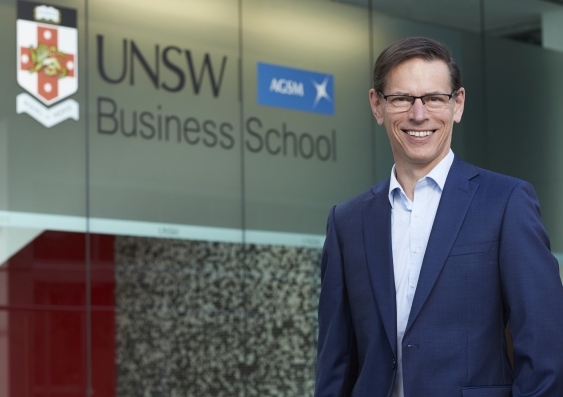
Aspiring graduates will require a more diverse range of skills outside of those taught in traditional business degrees, said Mark Uncles, deputy dean for education and professor of marketing at UNSW Business School.

“While pre-pandemic understanding of areas such as accounting and financial literacy, economic and marketing principles, business communications and teamwork all remain important for organisations, additional themes have emerged in recent times,” Professor Uncles said.

“These include learning how to survive – and thrive – in the digital economy. It is clear we need to give more emphasis to digital literacy, business analytics, organisational agility, workforce flexibility, innovation and entrepreneurialism. 

“This holds true because of the current pandemic, but also because of the other big issues we face as a nation, such as climate change, limited water resources, changing energy demands, urban growth and renewal, and population ageing. There are business challenges – and opportunities – in all these areas,” he said.

To equip graduates with a sharper skillset, UNSW Business School engaged a wide range of employers as well as its Business Advisory Council members. The council includes board directors and c-suite executives from Australia’s top listed companies, regulators and public sector organisations who assist UNSW to better understand their business and organisational requirements.

MEETING INDUSTRY BY DESIGN

EY’s Oceania Campus recruitment lead, Sarah Perrens, served as the industry representative on the Academic Program Review panel redesigning UNSW’s Bachelor of Commerce.

As well as the skills EY would expect to see in its graduates – such as communication, teamwork and problem-solving – Ms Perrens said the firm now assesses graduates for a range of other skills and competencies.

These include adaptability, being a virtual collaborator, drive and resilience, learning agility, and being technology focused -- that is, the ability to keep abreast of new technologies and how they can be practically applied.

“We are seeing an increasing demand for future skills in data and analytics, and staying abreast of new technologies such as automation, robotics and AI. Creativity, problem-solving, adaptability and resilience will be paramount in the future,” Ms Perrens said.

Prof. Uncles underscored the importance of producing graduates with a current and focused work-ready skillset.

“UNSW’s Bachelor of Commerce has always done well in attracting students with first-rate maths and literacy abilities with a good technical grounding, and then building on that to develop their analytical and critical skills within a particular discipline," Prof. Uncles said.

He said employers were looking for graduates with analytical and critical thinking skills who could work with data and apply their insights to address particular business or societal problems. Areas of application are as diverse as auditing and fintech, and consulting and business analytics.

COMMUNICATION SKILLS COUNT

Prof. Uncles said employers were also looking for communication skills that extended beyond simple oral and written presentation to the visual presentation of data using platforms like Tableau and PowerBI, and the ability to draw out insights for decision-making.

Other valuable skills incorporated into UNSW’s Bachelor of Commerce include teamwork and collaboration to address practical business problems, well-developed levels of cultural competence, business ethics and leadership in terms of influence.

“All our students will be engaged in work-integrated learning and have access to our unique Career Accelerator services, including options for career development, internships, mentoring, and practicums. They will curate these activities – and their attainment of skills – into personal portfolios,” Prof. Uncles said.

“We are embedding all of these skills and competencies, and practical employability features, into the curriculum – they aren’t optional extras, they are built into the fabric of the degree.”

CROSS-FUNCTIONAL VALUES ADD UP

Employers and UNSW’s Business Advisory Council also highlighted the importance of cross-functional and cross-disciplinary thinking. The Bachelor of Commerce first year courses now come together as a fully integrated offering.

“If you think about what goes on inside an organisation, there are interrelationships between all the functions,” Prof. Uncles said. “Accounting and finance principles naturally fit together, while international business and marketing often go together, so too do governance, regulation and ethics.

“In the broader business ecosystem, at a macro level, opportunities and problems don’t present themselves in neat packages, so it’s important to apply a business mindset where connections and interdependencies are understood.

“We carry this through to double degree programs where the Bachelor of Commerce is offered in combination with other degrees,” Prof. Uncles said.

A large number of students, for example, were undertaking a Commerce degree with Engineering, Prof. Uncles said. He explained how this approach might add cross-functional value within an organisation.

“Say there was a problem around water resources in a region of Australia," Prof. Uncles said. "You can think about that from an engineering perspective, but also think about the business opportunities presented by water management.

“That’s where value is created, or if you do it badly, where value is lost – and that’s the kind of connected thinking we are developing in our students.”

The first undergraduate intake will be for term one, 2021.

More details are on the UNSW Business School website.


ends

Don’t fear the robots: Flinders Uni helps future workers with WIL power

FOR WORKERS of the future to thrive with robots and artificial intelligence, they will need to learn innovation through strong Worker Integrated Learning (WIL) programs, which can be in the form of apprenticeship, placement or industry-partnered programs.

Flinders University professor Giselle Rampersad has investigated key factors that drive innovation among WIL students and has found that upskilling workers with vital innovation capabilities is key for the future employment landscape. 

“While there is some fear that robots and artificial intelligence may replace some occupations, workers will remain relevant in a fast-changing career landscape if they are innovative, able to spot opportunities that can transform industries and provide creative solutions to meet global challenges,” Professor Rampersad said.

To develop such capabilities, WIL has emerged as an important approach – which Prof. Rampersad has investigated with a quantitative, longitudinal study that measures student capabilities before and after participation in a WIL placement at a business. 

The study found that critical thinking, problem solving, communication and teamwork have significant impacts on the development of innovation, which is the vital ingredient for workers in the era of artificial intelligence.

The study also identifies which areas of WIL programs have been most beneficial, and what areas need more attention to nurture greater innovation.

“Reaping the benefits of industry 4.0 requires a focus on the human factors,” Prof. Rampersad said.

“Innovation is needed to transition the workforce effectively. This will not only ensure that workers can effectively and confidently use the new technologies but also that they survive and thrive in a quickly changing workplace.”

To measure the effectiveness of current upskilling of workers, Prof. Rampersad analysed responses to a questionnaire of more than 100 students – both before and after their placement – who participated in the WIL program.

RESEARCH PAPER RELEASED

Prof. Rampersad’s paper – Robot will take your job: Innovation for an era of artificial intelligence – has been published in the Journal of Business Research. The study was funded by the Australian Collaborative Education Network (ACEN) in collaboration with Dr Vlatka Zivotic-Kukolj.

Professor Rampersad is pleased the study has been able to produce a validated tool that quantitatively measures the development of innovation and its drivers.

“Results from this tool can feed back into WIL program development to enhance student preparation and support for skill development,” Prof. Rampersad said. “It will also be useful in offering feedback to students on their career progression, self-awareness and empowerment for their development.

“For industry and a community looking for innovative solutions to address challenges facing the areas of health, food, environment, manufacturing and the economy, the interaction of talented students with industries and businesses will prove highly beneficial.

“The well-researched and well-developed tool to measure the development of innovation provided by this study can be used to enhance collaboration and innovation between university and industry.

“In an era increasingly characterized by artificial intelligence, rather than fearing the robot, attention is needed on equipping the workforce with innovation skills for the future of work.”

https://doi.org/10.1016/j.jbusres.2020.05.019

ends

What jobs are making it beyond COVID-19?

By Leon Gettler >>

BUSINESSES are getting to a post-pandemic normal, but many Australians are not comfortable getting back to work.

New research by Ipsos found that Australians are split on the issue of returning to work – with many worried about their safety.

Ipsos has been monitoring trends since February and, since May, it has seen a growing tension between a desire to open businesses and restart the economy mixed with concerns from people about leaving their homes,

The first survey found Australians were evenly divided with 49 percent saying too many people were at risk and versus 51 percent who said the risk was minimal and businesses needed to get moving.

They were also split on whether jobs lost in the lockdown would return with 47 percent saying they would return and 45 percent saying they would not return.

JOBS LOST FOREVER?

Globally, there were more people saying the jobs lost in the lockdowns would not return.

“The other interesting thing we saw was, both in Australia and globally, it was older citizens who were a bit more sceptical about the return of jobs,” Ipsos director David Elliott told Talking Business

“So we saw in Australia that 47 percent of that 45-74 year old group were suggesting jobs won’t return versus 37 percent of under 35s.

“The trend was the same globally. What we saw in Australia is we are probably less pessimistic about the return of jobs.

“The equivalent figures globally was that 53 percent of 45-74 year olds thought jobs wouldn’t return versus 45 percent of those under 35.”

GLOBAL SNAPSHOT

The Ipsos survey is done online across 16 countries with a wide-ranging questionnaire. The countries are Australia, Brazil, Canada, Germany, Spain, France, India, Italy, Japan, Mexico, Russia, South Korea, UK, US and South Africa.

Mr Elliott said the data tied in with other questions about how long people thought it would be before the economy returned to normal. People said it would take a long time.

“Our latest data says globally and in Australia, 36 percent of people are talking about returning to normal in six months to a year, another quarter are saying one to two years and then you have another 10 percent saying it’s two or longer or never,” Mr Elliott said.

“That’s partly what drives that scepticism about jobs returning because no-one is seeing a quick turnaround from the pandemic economically.”

Ipsos also found 53 percent of people predicted they would make small changes to their daily lives and another quarter were saying they would do everything exactly the same.

The survey sends a clear message to governments, central banks and businesses about what people expect and need.

“I think what the community wants from government but also business is some messaging and reassurance that ‘We know how to get through this and we know how to keep you safe as we return to it’,” he said.

Mr Elliott said the issue for larger businesses was ensuring they could manage behaviours across all of their sites

“You talk to people out there and the experience they get in one particular banded store in one place is very different to the experience they get maybe 20 minutes down the road or half an hour on the other side of Sydney, so that raises questions and feeds back to this nervousness,” he said.

www.ipsos.com

www.leongettler.com

Hear the complete interview and catch up with other topical business news on Leon Gettler’s Talking Business podcast, released every Friday at www.acast.com/talkingbusiness.  

Gig workers status challenged by pandemic

By Leon Gettler >>

COVID-19 has created a major challenge for the gig economy, the growing number of workers abandoning traditional ‘nine-to-five’ employment in favour of working independently on a task-by-task basis for various employers.

It is also challenging the legal profession, raising a number of questions.

Gig economy workers are paid for when they work. COVID-19 has in some cases decreased the amount of work and in other cases increased it.

Leading Australian barrister Ian Neil SC said there are questions about where gig economy workers fall under the Federal Government’s various stimulus and support packages. 

“Those questions have not been adequately addressed, or at least fully addressed by the government in the announcements it’s made about those packages,” Mr Neil told Talking Business.

“The focus will be on determining where the gig economy workers fall for the purposes of the stimulus and support packages,” he said.

“To my mind, very many gig economy workers will come under at least some of the income support measures that the government has introduced. I think that will be sorted out administratively rather than legally.

“The trigger for many of the government’s income support measures depends on the amount by which a particular worker’s income has been reduced. Some gig economy workers will have increased their income, others will have decreased their income. There will be others in the margin between.”

NOBODY EMPLOYS GIG WORKERS

The point is that no company actually ‘employs’ gig workers. Legally, gig workers are not employees.

Some platforms like Uber came out with measures to support drivers who had lost the opportunity to work. This was instead of a measure like sick leave. Gig economy workers don’t have sick leave because they are not employees.

Mr Neil said the growth of the gig economy would put pressure on the legal system.

“But that’s the kind of pressure the law is used to dealing with, our law is very well adapted to dealing with new circumstances. Our is not a codified system so it is adaptable,’’ he said.

“How it will adapt? That’s another question.”

Mr Neil said there are now cases before the Fair Work Commission looking at whether some gig economy workers are employees. He said there are many features in their relationship with the people who acquire their services, as well as with the platforms, that point against them being employees.

“The law, in this and every other area, is going to be wrestling with the consequences of the COVID-19 emergency for a very long time, not just in relation to the gig economy but in relation to many aspects of commercial life and many aspects of employment as well,” Mr Neil said.

“Just think of the entitlement of employers to stand employees down without pay. That’s a whole species of question that the gig economy doesn’t have to wrestle with.”

TIME WILL TELL

Mr Neil said it would take the law several years to work through these questions.

“Work, as a type of economic social behaviour, is the subject of so much of our law and that law will have to wrestle with what’s happening now, unprecedented events really, for a very long time,” Mr Neil  said.

On the other hand, he said the economy is more adaptable to change than employment relationships.

“The latter are heavily regulated in our society, the former are much more dictated by the individual circumstances of the people who are working in the gig economy.”

www.leongettler.com

Hear the complete interview and catch up with other topical business news on Leon Gettler’s Talking Business podcast, released every Friday at www.acast.com/talkingbusiness

ACS welcomes Prime Minister’s JobMaker proposal

ACS, the professional association for Australia’s technology sector, has welcomed the Federal Government’s JobMaker plan outlined by Prime Minister Scott Morrison at the National Press Club yesterday afternoon.

Equipping businesses, governments and students with an accurate picture of industry’s skills needs is an essential part of building a 21st century workforce, said ACS president, Ian Oppermann.

“The COVID-19 lockdowns have provided challenges to the entire economy and ACS has released several key initiatives supporting a wide range of areas to support the technology sector and our membership," Dr Oppermann said. 

These initiatives include cyber security and working from home technology guides, a career hub for ACS members, and a Virtual Tech and Employability Skills half day conference to assist those who are entering the technology workforce.

“Now, as Australia emerges from the COVID-19 lockdown, we are presented with a once-in-a-generation opportunity to position the nation so our businesses and citizens can take advantage of the Industry 4.0 era,” Dr Oppermann said.

“This was the thinking behind ACS’ announcement last year of an AI centre of excellence based out of our Melbourne Innovation Hub and early stage investment fund.

“However, in order to take advantage of these opportunities, we need a skilled and flexible workforce underpinned by a modern training system, something that has been highlighted by ACS’ annual Digital Pulse report."

The 2019 Digital Pulse reported three policy priorities for driving the growth of Australia’s digital economy: boosting skills, start-ups and investment, with the highest priority being skills development.

Last year’s report found the nation faced a shortage of 100,000 tech workers by 2024 on current trends while the direct benefit for individuals reskilling to fill these roles could potentially be an income boost of more than $11,000 per year.

The 2019 Digital Pulse also noted that while university completions in technology degrees had risen slightly, there was a significant decline of 11,875 VET sector technology subject enrolments since 2016, underscoring the Prime Minister’s call for refreshing the options available through vocational education channels, Dr Oppermann said.

www.acs.org.au 

ends

Airline Industry Retraining program helps new careers take flight

THE CORONAVIRUS pandemic has knocked travel and tourism industry workers for six, but a new training program that can retrain people for jobs in the data science and cybersecurity sector may get them back in the game.

Even though restrictions are starting to ease across many Australian states, t the travel and tourism industries are unlikely to see a ‘return to normal’ anytime soon. 

Many in these professions will find that with greatly restricted international travel -- and reduced demand for travel -- there will be a long hard road back to normality.

Despite this bleak outlook, job openings in data science and cybersecurity remain strong, with employers projected to increasingly demand these skills. This presents an unprecedented opportunity to retrain and reskill workers from struggling sectors to those where the need is greatest.

The Institute of Data has created the Airline Industry Retraining (AIR) scholarship program to transition workers in travel and tourism, who are struggling to make ends meet in the coming months, into the booming areas of data science and cybersecurity.

Airline industry analyst and author Geoffrey Thomas said, “The aviation industry has been dealt a body blow by COVID-19, particularly in Australia, where travel restrictions are rigorous. There will be major adjustments to the size of the industry in Australia in the short to medium term, with a return to pre-COVID-19 levels and growth not forecast till 2023 at least. 

"While the industry may be ready for take-off, passengers are very cautious and it will take significant fare cuts to get them in the air, which is not good news for full employment to pre-COVID-19 levels scenario," Mr Thomas said.

"In Australia it is estimated that over 100,000 people are employed in the industry (airlines and airports) with 700,000 employed in tourism. At the moment about 80,000 in the airline industry are directly impacted,” he said.

Following the runaway success of the Upskill Now! Scholarship Program with UTS, the AIR program provides scholarships of up to 75 percent of course fees for redundant and unemployed workers seeking to enter the data science and cybersecurity industry from a qualifying travel and tourism profession.

Workers within the struggling aviation and tourism industries have many applicable skills and qualifications that set them apart from others when it comes to retraining into these fields, according to Institute of Data executive director Andrew Campbell.

“The crisis isn’t over for workers in the travel and tourism sectors, and won’t be over for a long time," Mr Campbell said. "Through no fault of their own, many skilled workers will find themselves on reduced hours, reduced pay or ultimately made redundant.

"We urge workers in these sectors to consider the skills they currently have, and how they can build on them and transition to other areas of the workforce where demand will remain strong.

“Many skilled aviation and tourism workers have already been doing data modelling and analysis at work by using tools like Excel every day. Things like aircraft seat allocation, route planning etc. are primarily data-driven jobs, it’s a genuinely good foundation from which to build new Big Data or AI skills. For others in the industry, they’ve had to pass security checks and risk management courses that serve as great indicators for their applicability when working with sensitive data," Mr Campbell said.Andrew Campbell.

“That said, retraining into a new sector is no small feat. A career change is more than simply learning new skills and tools.

"We’re offering heavy scholarships to our retraining programs that focus on one-to-one career coaching from experts within the data science and cybersecurity industries. This means we can rapidly upskill Australians on the skills that matter to employers right now, as well as get guidance on where their talents are best suited within these disciplines.” 

SHORT CUT TO JOBS

Retraining programs often stop when the qualification is granted, leaving graduates to puzzle out what the next steps are to putting the new skills to use in the real world.

AIR is designed to help those who have been made redundant or unemployed through this crisis to get a new job quickly, skipping the learning curve of how to negotiate interviews in a new field.

For people retraining from the aviation industry, with income reduced by more than 30 percent, up to a 75 percent scholarship is available, Mr Campbell said.

There are limited scholarships available and they will be awarded on a first in first served basis. To be eligible peoplemust enrol into an eligible course after May 19, 2020, have experienced a recent redundancy or reduction of income of more than 30 percent from a qualifying travel and tourism role. 

Applications are open to all Australian and New Zealand residents and citizens. Standard application processes apply and eligibility criteria are:

  • 75% scholarship - 10+ years in travel & tourism and income reduced by >30%
  • 50% scholarship - 5+ years in travel & tourism and income reduced by >30%
  • 25% scholarship - 1+ years in travel & tourism and  income reduced by >30%

Recipients are entitled to three months full time or six months part time industry training in one of two practical skills training courses, either Data Science & Artificial Intelligence or Cyber Security. The courses cost $17,500 before the above discount is applied, and can be taken remotely from home whilst the nation is under lockdown and will revert to both on-campus and remote options when restrictions are lifted.

“Data is now the most important asset for every business, and the coronavirus pandemic has highlighted this fact to many businesses. How well you manage it, protect it and understand it can now determine whether a business succeeds or fails. This is what is driving the demand for jobs now and into the future,” Mr Campbell said.

“As more work is done online, cyber security experts are busier than ever protecting business from the new vulnerabilities associated with remote data access. The more talent we have in this field in particular. These are exactly the type of jobs that Australians should be training for right now,” he said.

The courses offered through the scholarship take 12 weeks to complete full time or 24 weeks part time with graduates receiving Industry accreditation from the Institute of Data and a University Certificate of Completion.

The AIR Scholarship Program is designed to help applicants manage a career transition into these growing industries.

For eligibility criteria and more information, visit https://www.institutedata.com/courses/air-scholarship-program/

ends