Training & Careers

News Corp and Xero produce podcast ‘help’ for SMEs

NEWS CORP Australia and cloud accounting software group Xero, have produced a six-part podcast series – unearthing and discussing the biggest pain points faced today by Australia’s 2.1 million small-to-medium businesses (SMEs) – to help them find pathways to success.

With the survival rates of small businesses reported as being just two in three, News Corp and Xero decided to partner together to improve these statistics.

This is the first time podcast content is being driven by the News Corp Australia umbrella brand, supported by all metro mastheads, The Australian, news.com.au and News Xtend.

Hosted by Lauren Moloney of News Corp’s SME digital marketing solutions division, News Xtend, the Mentor Next Door podcast series, addresses the key challenges in running a small business.  

Ms Moloney said small businesses faced common challenges: struggling to find the time to work on, not in the business; managing cash flow; and how to attract and retain customers.

“We decided to partner with Xero to deliver content that would address key pressure points from experienced business owners,” Ms Moloney said.

“I’ve been working one-on-one with small business owners for years helping them build their brands and reach their goals with creative digital marketing solutions and I know how important it is for small businesses to continue learning and evolving.

“Together with Xero, we saw a gap in the market to provide valuable business tips by utilising mentor and mentee talent through the medium of podcasts.

“Now, with an incredible line-up of real, everyday people matched as mentors and mentees, audiences will hear invaluable insights and expertise, helping them overcome the most common pain points, whether it’s managing cash flow and attracting more customers, or getting on top of your business metrics,” Ms Moloney said.

Mentor Next Door is designed to feel like a private mentoring session, listening to some of the industry’s top minds, sharing authentic stories and insights about how to overcome obstacles, avoid mistakes, and stay on the path to success.”

In her role at News Xtend, Ms Moloney is well known within the small business sector, having strong product, digital marketing and sales knowledge, and finding creative solutions to build brands and grow businesses.

“At News Corp, we are committed to providing an agile, innovative and market-leading product suite for SMEs to achieve their business goals through News Xtend digital marketing solutions.”

Small business director of Xero Australia, Penny Elmslie said, “Partnering with News Corp Australia is an incredible opportunity for us to facilitate conversation about small business pain points and success stories, so that small business owners can learn and continue to grow.

“We do more than just provide beautiful accounting software. We have built a platform that aims to connect, inspire, encourage and support the business community to overcome obstacles, solve problems, kick-start businesses, and reach their full potential. And for the mentors and mentees involved in the podcasts, it’s a great opportunity to gain wide exposure through the News Corp network.”

The News Corp Australia and Xero podcast series is an extension of a wider Xero marketing campaign, hoping to create a deeper level of engagement with small business owners.

The series includes six podcasts, supported by print and digital marketing, a content marketing campaign for News Corp and Xero’s small business customers, social media and public relations campaign.

Supporting the podcasts are stories written by News Corp’s network of small business experts.

“We have the audience reach and the access to business writers, and Xero have the tools to help small businesses succeed. It’s a great partnership,” Ms Moloney said.

The first podcast – ‘Growing your Pie’ – features mentor Taryn Williams, CEO and founder of theright.fit and WINK Models, sharing her recipes for success with mentee Brooke Rudzis of Sunday Minx.

Ms Williams talks about reaching new markets, growing your customer base, and keeping them happy so they’ll come back for more.

Episode two features mentor Alexandra Tselios, commentator, writer, keynote speaker, board director and founder and CEO of The Big Smoke discussing ‘Mitigating Financial Risk’ with mentee Courtney Sanders, co-founder of Well Made Clothes. Ms Tselios shares some of her early mistakes and provides practical advice on how to get on top of the accounts and finances, allowing more time to look at the bigger picture.

Other episodes in the subscription service focus on time management, smartphones and business, managing cash flow and knowing how business is performing.

www.newsxtend.com.au/mentornextdoor

ends

Queensland resources companies go for jobs 'gold'

QUEENSLAND’s resources sector is laying claim to powering jobs growth across the state, using Australian Bureau of Statistics (ABS) data showing an increase of close to 10,000 jobs in the February quarter as evidence.

Queensland Resources Council (QRC) chief executive Ian Macfarlane said the number of jobs created in just one quarter was more than the number of athletes competing at the Commonwealth Games. 

“Over the coming days around 6,600 athletes from around the world will settle into the official Games village for two weeks. However, 9,095 resources sector jobs have been created which have the potential to be lifetime careers,” Mr Macfarlane said.

Queensland Minister for Employment, Shannon Fentiman said the latest ABS figures "show we are right on track with our commitment to more jobs for Queensland".

“This is fantastic news for Queensland and it’s pleasing to see the fast growing resource sector is providing more jobs for the regions," Ms Fentiman said.

“Since the Palaszczuk Government was elected we have worked with business and industry to create more than 160,300 new jobs in Queensland.”

QRC's Mr Macfarlane said 'on the podium for jobs growth' was "gold for resources, up 16 percent, silver for manufacturing with 14 percent and bronze for wholesale trade rising 8 percent.

“Most resources sector careers are highly paid and highly skilled and this data again demonstrates the sectors regional reach, with more than 85 percent of the jobs outside south-east Queensland,” Mr Macfarlane said.

“Resources belong to all Queenslanders and these new jobs lift our common wealth.”

The ABS quarterly labour force data showed:

  • Exploration and mining support services jobs up 63 percent
  • Coal jobs up 23 percent
  • Metal jobs fell 15 percent but still up 98 percent over the 12 months.
  • Oil and gas jobs rose 3 percent and up 61 percent over the 12 months.

Employment growth in the sector is leading to greater diversity. Indigenous employment in the Queensland resources sector has outstripped growth across the total resources sector workforce, doubling in 10years, the ABS figures showed.

“In 2006, Indigenous people comprised 3 percent of the State’s workforce in resources, whereas in 2016, it had grown to 4 percent. Queensland’s Indigenous population is 4 percent which places the resources sector as one of the few industries with a genuine representation.” Mr Macfarlane said.

The sector now provides one in every $6 in the Queensland economy, sustains one in eight Queensland jobs, and supports more than 16,400 businesses across the State – with almost 7000 businesses in the Greater Brisbane region – all from 0.1 percent of Queensland’s land mass, acco5rding to the QRC.

Resources jobs in Queensland this financial year include:

  • New coal leases for Stanmore Coal – 210 jobs
  • Santos to invest $900m in gas developments – 400 construction jobs
  • New Century Resources and Santos gas supply deal – 240 jobs
  • BMA apprentices start work in central Queensland – 40 jobs
  • Hastings Deering apprentices – 48 jobs
  • Rio Tinto’s Indigenous workforce across Cape York – reaches 574 jobs
  • Batchfire Callide – 450 jobs
  • Metallica Minerals Bauxite Project – 26 jobs
  • Glencore’s Lady Loretta restart – 250 jobs
  • Glencore Copper – 200 jobs
  • Arrow and Shell’s QCLNG sales agreement – 1000 jobs
  • Senex wins petroleum tender – 150 jobs.

www.qrc.org.au

ends

Torrens Uni launches world-first VR careers profiler

TORRENS University Australia has launched a world-first virtual reality (VR) experience to help prospective university students choose their future courses of study,.

‘The Future of You’, developed by Auckland-based virtual and augmented reality (AR) specialists M Theory, is a fully immersive VR environment in which students make a series of decisions to discover their unique personality profile, which in turn uncovers the courses of study that might suit them best and help chart their future careers.

Continue reading

Macquarie University business incubator gets Royal approval

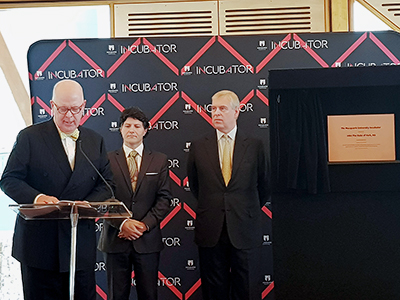
THE DUKE of York, Prince Andrew, not only officially opened the new business innovation centre at Macquarie University in Sydney, he did so approvingly and with best wishes for its success.

NSW Deputy Premier and Minister for Small Business, John Barilaro said the Macquarie University Incubator would bring university researchers together with local businesses and entrepreneurs to create new products and ideas.

“The launch of the Macquarie University Incubator by His Royal Highness The Duke of York, Prince Andrew, is a historic occasion for Macquarie University and NSW,” Mr Barilaro said.

“The NSW Government has funded the centre’s construction through the Boosting Business Innovation Program which is providing $18 million to the state’s 11 universities – including $1.5 million to Macquarie University – and the CSIRO. 

“The aim of the program is to drive innovation and develop new ideas by bringing our best business and academic brains together.

“The centre will provide space for 57 desks, meeting rooms, conference facilities, entrepreneur training programs, and regular events to help SMEs build their businesses,” he said.

NSW Finance, Services and Property Minister, Victor Dominello, who joined Prince Andrew in opening the state-of-the-art centre, said like the companies that would use the incubator, the new Macquarie University facility is itself innovative in its design and construction.

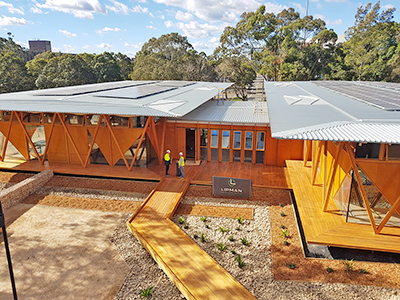
“The centre’s roofing has been constructed by Strongbuild Manufacturing which was assisted under the ‘Boost’ program to test special fire-resistant cross-laminated timber with the CSIRO to ensure it satisfied Australian building requirements,” Mr Dominello said.

“Trench convectors will naturally cool and heat the building which is expected to maintain a temperature of between 19-26 degrees.

“Air quality will be maintained with the help of CO² sensors that will monitor and let fresh air into the building when needed, helping ensure good ventilation and well-being.”

Mr Barilaro said the Pitch@Palace Australia event is one of many which will take place in NSW, Victoria, and Queensland involving about 400 technology entrepreneurs.  

“It is terrific to see the new Macquarie Business Incubator opening its doors to host this significant event that allows entrepreneurs to pitch their ideas to investors on a global scale,” Mr Barilaro said.

www.mq.edu.au

ends

Captains of industry mentor Bond’s best and brightest

NINE Bond University student leaders have been matched with ‘Queensland’s captains of industry’ in a mentoring program, designed to enhance graduate employability and provide vital career insights and opportunities.

Bond University vice-chancellor and president, Tim Brailsford, said the program was now in its fourth year and had attracted many of the state’s top business executives since its inception, including inaugural Queensland Chief Entrepreneur Mark Sowerby. 

The mentors taking part in the 2017 Vice-Chancellor’s Mentor Program are KPMG partner-in-charge, Adam Twemlow; Australian University Sport CEO, Don Knapp; Emmanuel College Principal, Patrick Innes-Hill; Trade and Investment Queensland executive director for international education and training, Rebecca Hall; Blue Sky Alternative Investments head of venture capital and executive director, Elaine Stead; Westpac Institutional Bank executive director, Richard Green; Davidson Recruitment founder and director of growth, Rob Davidson; Bank of Queensland Specialist Business CEO, Brett Robinson; and G8 Education general counsel and company secretary, Sarah Zeljko.

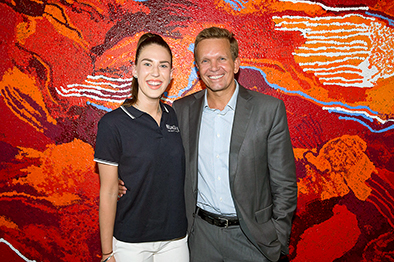
In 2016, Mr Sowerby was paired with business and law student, Emma Sam. Mr Sowerby said the most important thing the program offered students was opportunity, by bridging study with the real world and providing tangible and personal connections.

“I find if you give young people a sliver of an idea, a crack, an opportunity – the good ones tear back the curtain and just go charging through,” Mr Sowerby said.

“Emma certainly did this by saying ‘yes’ to every single opportunity she was given.”

Ms Sam said she felt incredibly fortunate to have had Mr Sowerby as a mentor for the past year.

“Mark Sowerby is an amazing man and inspirational leader who has opened my eyes to the business world and possibilities of my future career,” Ms Sam said.

“He has taken me under his wing and in doing so, I’ve been able to experience so many unbelievable things, including working alongside his Blue Sky team on Madison Avenue, New York. Being involved with Blue Sky has given me exposure to an incredible range of individuals from all over the country and the world. I have never felt so inspired and motivated to make the most of every opportunity given to me and take my career in my own two hands and run with it.

“Mark’s achievements extend far beyond his building and transformation of Blue Sky, including swimming the English Channel and supporting countless charities. He is truly a down to earth, amazing, inspiring and unique individual and I cannot stress the impact that he has had, and will continue to have, on the rest of my career.”

The Vice-Chancellor's Mentor Program pairs students with accomplished mentors within their field of study to provide one-on-one guidance and career advice throughout the duration of their degree. The initiative is offered as part of the Vice-Chancellor’s Scholarship, awarded annually to a handful of the country’s highest achieving school-leavers.

www.bond.edu.au

ends

Seek’s video interview system cuts hiring process by 10 hours

EMPLOYMENT marketplace Seek is launching a new video interview platform, claiming it can reduce the hiring process by 10 hours or more.

Seek’s partnership with the Spark Hire video interviewing platform is aiming to produce results “10 times faster than traditional phone recruitment methods” according to Seek Australia and New Zealand managing director Michael Ilczynski. 

Mr Ilczynski described the Seek Video Screen system as “a collaborative candidate shortlisting and assessment tool” that helps employers and recruiters to connect with ‘highly relevant talent’ faster than ever before. 

Mr Ilczynski said the partnership with Spark Hire was another example of how efficient technology can be at streamlining the screening and shortlisting process.

“By partnering with leading technology companies like Spark Hire we continue to demonstrate our commitment to providing competitive advantages for recruiters and companies driving more hires and increased revenues,” he said.

He said Seek Video Screen would simplify and add value by reducing inefficiencies ⎼ no matter the stage of the recruitment process. He said the system was applicable across all role types, from high volume customer facing roles all the way through to highly skilled front-end developer roles.

According to Mr Ilczynski, through video interview submissions, hirers and recruiters could review suitable candidates in less time, make more informed hiring decisions to increase candidate conversion rates and speed up time-to-placement. He said Seek Video Screen removed friction from the screening process, to save time and money.

“By conducting video interviews, hiring teams can better evaluate personality and communication skills in far less time; improving quality of hire and allowing candidates to showcase their personality and their skills,” Mr Ilczynski  said. “With collaboration features and sharing options, hiring teams can facilitate thoughtful discussions on which candidates they should pursue.”

Spark Hire CEO Josh Tolan said through Seek his company could “help more recruiters and employers make informed short-listing decisions in a reduced timeframe”.

“Video interviews can lessen unconscious bias and make compliance easier because hiring managers and recruiters can compare candidates side-by-side as they answer identical questions.  By removing any geographical limitations, Seek Video Screen allows hirers to access the best talent regardless of location,” Mr Tolan said.

“We’re incredibly excited to partner with Seek to bring our video screening solution to Australian and New Zealand recruitment agencies and businesses.”

National Australia Bank (NAB), talent volume acquisition manager, Michael Virgo has been overseeing Seek Video Screen’s adoption as part of NAB’s volume hiring model.

Mr Virgo said the system had been instrumental in effectively managing large quantities of candidate interviews.

 “As part of our volume hiring, Seek Video Screen gives us specific insights into candidates in much less time, and gives our candidates a positive experience that is fast and straightforward.”

According to Seek’s Mr Ilczynski, video interviewing was growing in popularity with recruiters and employers because it provided “a better picture of job applicants than other early stage recruitment techniques such as phone screening or online surveys”.

“Our internal talent acquisition team has been testing Seek Video Screen in place of phone screen when hiring customer facing roles.,” Mr Ilczynski said. “We have seen a reduction in initial screen times by 10 hours. 

“Our recruiters have reported increased confidence in the quality of candidates shortlisted via video screen, leading to further efficiencies downstream including fewer interview rounds, a quicker time-to-placement and better-quality hires.”

www.seek.com.au

www.sparkhire.com


ends

Medical tech. ‘on steroids’ at QUT

AN INTENSIVE entrepreneurship bootcamp at the Queensland Institute of Technology (QUT) campus has seen a number of technology start-ups ‘muscle up’ to some amazing medical solutions.

They range from a fashionable pair of earrings that assist women with gestational diabetes – by automatically monitoring and helping to control blood glucose levels – to a device that helps brain-to-bladder function among geriatric patients. 

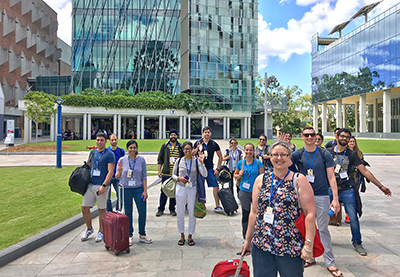
The ideas were developed during an intensive week-long course held at QUT in Brisbane – the MIT Global Entrepreneurship Bootcamp – which attracted 118 entrepreneurial thinkers from around the globe.

Tasked to find novel solutions to some of the world’s biggest global problems, the top two teams were chosen for their solutions to the most personal of medical problems.

MIT Global Entrepreneurship Bootcamp  participants were selected from more than 6,000 global applicants to transform their innovative ideas into burgeoning businesses.

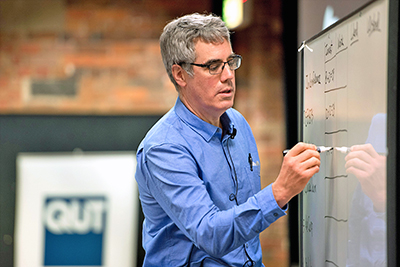
They were put through the rigours of a one-year MIT course, condensed into a seven-day action-based learning experience, led by entrepreneur-turned-educator Bill Aulet, who also wrote the book Disciplined Entrepreneurship.

Brisbane women Tamara Mills and QUT’s alumni Nyree McKenzie and Lee Brentzell were among the top two teams, selected to pitch their ideas to an international panel of venture capitalists from Brisbane, San Francisco and Boston at the conclusion of the bootcamp.

Ms Mills is a second-time gestational diabetic who has a MedTech commercialisation background. She joined Jean Hausser from Israel, Abhishek Appaji from India, Brendan Barbato from the US and Coutney Condren from Australia to form a team called EZBT during the MIT Bootcamp.

The team shared experience in diabetes research and development, biomedical engineering and artificial intelligence computational bioscience.

“One in 10 pregnant women will be diagnosed with gestational diabetes and one in three babies born to women with gestational diabetes have complications such as being born abnormally large with high risk of developing diabetes later in life,” Ms Mills said.

Ms Mills said up to 60 percent of women with gestational diabetes did not comply with regular self-monitoring requirements and diet control recommendations and this could have significant implications on the health of the mother and baby.

She said the cost of complications as a result of gestational diabetes in the US is estimated higher than $2 billion per annum and rising.

“We are developing a non-invasive wearable device, a fashionable pair of earrings that not only continuously monitors blood glucose levels without needles and without hassle, but leverages deep machine learning to predict blood glucose response to foods before being eaten, helping mothers minimise complications for themselves and their babies,” she said. 

The team filed a provisional patent on the non-invasive blood glucose measurement technology alongside building the working prototype due to be complete in July this year.

“We have had significant interest expressed by healthcare providers and insurance companies across Australia and the US and are actively seeking investment for full commercial development of the technology,” Ms Mills said.

“It was an honour to be named winners of the MIT Bootcamp but we didn’t set out to win but to learn as much as possible about disciplined entrepreneurship and build the foundations of a company that can improve the lives of mothers with gestational diabetes.

The all-Australian second place finalists, named InConfidence, drew upon their combined clinical, medical technology and commercial backgrounds to pitch a solution that addressed a widespread problem facing Australia’s aging population.

Ms McKenzie (pictured right) said 70 percent of people living in residential aged care suffer from urinary and/or faecal incontinence with conventional treatments largely unsuitable due to negative side effects and invasiveness of surgical procedures.

“These treatments combined with the more prevalent conservative solutions such as adult nappies lead to a loss of dignity, reduced independence and social isolation for incontinence sufferers,” Ms McKenzie said.

“Our solution overcomes the problem with a discrete, non-invasive wearable device that has minimal side effects.”

She said a functional prototype had been developed which acts to normalise the neural communication between the bladder/bowel and the brain to restore correct function.

Since their debut at QUT the teams have committed to formalising their entrepreneurship journey together.

Ms McKenzie said InConfidence had received interest from healthcare providers and would present the technology to the NSW Department of Health and to Cicada Innovations, an Australian deep technology incubator, for prospective funding.

“We realised that our team is stronger together, and so we’ve also become each other’s board of advisors to keep us all accountable and driven to see our ideas through to market commercialisation,” Ms McKenzie said.

Rowena Barrett, head of the School of Management at QUT, said the MIT Bootcamp helped build Brisbane as a global hub of innovation and entrepreneurship.

“Entrepreneurship is a skill that is being taught,” Professor Barrett said. “QUT is developing graduates who can choose to be entrepreneurs in applying their discipline skills and knowledge to solve future global challenges.”

The State Government’s Advance Queensland program partnered with QUT to bring the MIT Bootcamp to Australia.

www.qut.edu.au

ends