Training & Careers

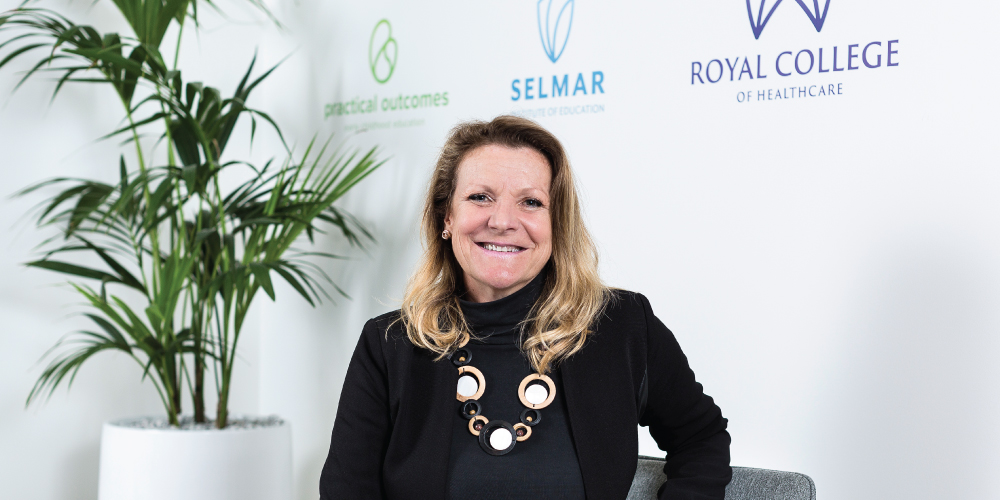
Viva Vivarelli, bringing VAs to life

By Leon Gettler >>

THE BIGGEST job opportunities are now out there for virtual assistants. Karen Vivarelli, who set herself up a virtual assistant (VA) and who is now running training courses for women planning to become VAs, said there was no shortage of opportunities for virtual assistants.

Because of her entrepreneurial skills setting herself up as a sole operator, Ms Vivarelli has been named a finalist for the 2021 AusMumpreneur Awards.

Rather than a plain old administrative secretarial role, virtual assistants can manage a company’s social media and digital marketing, its email marketing or even run its podcasts.

Ms Vivarelli chose to become a virtual assistant back in 2015, when she was working as a personal assistant in a legal firm and was made redundant when she became pregnant with her second baby. 

She saw that as the opportunity to get out of her nine-to-five career and start exploring flexible opportunities because she now had her second baby and needed that flexibility.

INSPIRED BY A ‘FRIEND OF A FRIEND’

Ms Vivarelli talked to “a friend of a friend” who had done just that and who explained what was required. Not many people were doing VA work at the time, but Ms Vivarelli realised she could manage such a role.

She “DIYed everything” – setting up her own website, doing her own social media posts and packages. As a result, she got her first two clients with her posts on Facebook.

“It was something I really loved. It was creative and I didn’t realise I was an entrepreneur until I started doing this,” Ms Vivarelli told Talking Business.

She said the combination of her having worked as a personal assistant, being familiar with finance and being tech savvy meant she had a solid start and, as soon as she started working with clients, she learned about the tech tools they use to run their online businesses. With those skills, she also became an online business coach.

Ms Vivarelli said there were “so many opportunities for virtual assistants” such as being able to work from home, at whatever time you like, which makes it perfect for mothers.

A well organised VA can choose where they want to work, whether it’s from home, or a café.

“It’s a laptop lifestyle,” Ms Vivarelli said. “As a business owner, they can set their own rates, work with anyone from around the world and there is no shortage of online businesses needing help. There was also the opportunity to work with businesses like graphic designers, and coaches and any online business.”

She said, with the pandemic, there was now more demand for virtual assistants as so few people were going into offices anymore.

VIRTUAL ASSISTANTS HELPED VIRTUALLY

Ms Vivarelli said there were so many skills to pick up. The effective way for people to do this was through online courses, with some specialists teaching virtual assistants how to do email marketing, launching podcasts or becoming a social media manager.

Ms Vivarelli’s  Kickstarter course teaches women how to set up their online business – which includes the financials, the social media and the website – how to on-board clients and find them.

It’s an eight week online course, together with group coaching calls and personal reviews

Ms Vivarelli’s course gives students access to tech tools such as Kajabi – which is a platform for memberships, podcasts and newsletters – MailChimp for email marketing, project management tools like Osama, Dubsado for client relationship management and Canva for graphic design as well as social media tools.

“It’s a life changing course,” Ms Vivarelli said. “Women have gone from being made redundant, or losing their jobs in a pandemic, or having to change and they have started working online as a virtual assistant.

“(They have) replaced their usual income with money in their business and they can then not be stressed about being home with the kids. It really is life-changing.”

www.karenvivarelli.com.au

www.leongettler.com


Hear the complete interview and catch up with other topical business news on Leon Gettler’s Talking Business podcast, released every Friday at www.acast.com/talkingbusiness.

https://play.acast.com/s/talkingbusiness/talking-business32-interview-with-online-business-coach-kare

ends

Catalyst for better aged – and child – care

By Leon Gettler >>

AGED CARE and early childhood care are two of the booming sectors of the economy where there will be a lot of jobs.

Catalyst Education is now putting a lot of focus on training workers for those sectors but, according to Catalyst CEO Jo Asquith, there’s a lot of work that still has to be done.

Ms Asquith told Talking Business the findings of the Royal Commission showed that the aged care sector was “crying out for a skilled workforce” and that one of the criticisms of the commission was there had not been enough planning in the capacity to have enough people on the ground to look after residents in aged care facilities or in home care. 

Catalyst Education was focused on training that workforce so that they could “hit the ground running”. 

Ms Asquith said the recent Federal Budget reflected the government’s commitment to create greater numbers of skilled workers into that area and in early childhood as well.

CATALYST FOR CHANGE

Catalyst Education is the parent company, with Selmar Education, Practical Outcomes and the Royal College of Healthcare in Queensland, and all the training is delivered through the registered training organisations.

There are 80 trainers and they all come from the sector. They might even have been directors of aged care centres and childcare centres in the past.

The childcare sector is a larger part of the Catalyst operation

About half the learners are already in the workforce, whether it is through an early childcare centre or in an aged care centre, most seeking to upskill to progress their careers and earn more money. The other half are unemployed or school leavers or mature age students wanting to get into the sector.

DEVELOPING ADAPTIVE SKILLS

Ms Asquith said the adaptive skills of care and compassion were key to their development. In the aged care sector, they are looking at every resident having 200 minutes of one-on-one care per day.

That 200 minutes a day covered personal care in areas like showering, moving residents from place to place and also bringing about connections with other residents and people in home care.

“That’s absolutely critical because it’s all about human centred education and it’s putting that clientele at the centre of everything we do,” Ms Asquith said.

“So there’s the technical skills which are absolutely critical, everybody has to come out with a suite of technical skills, but we’re really looking for people who are passionate about the sectors in which we deliver our programs, that have care and compassion and also how we develop that through the course of our training package, and that’s what the sector is crying out for.”

Ms Asquith said those “adaptive skills” spanned all sectors that Catalyst was now working in.

She said the 200 minutes per day per resident requirement highlighted the gap in the workforce strength that is currently a problem in the aged care sector.

“For me, one of the amazing things is we are working with two very vulnerable populations, the very youngest of our society and the very oldest of our society and going back to those adaptive skills, they are absolutely required across the sectors that we work in so it’s a really exciting space to be in,” Ms Asquith said.

www.catalysteducation.com.au

www.leongettler.com 

Hear the complete interview and catch up with other topical business news on Leon Gettler’s Talking Business podcast, released every Friday at www.acast.com/talkingbusiness

ends

Educators Pearson and Institute of Public Accountants sign MoU

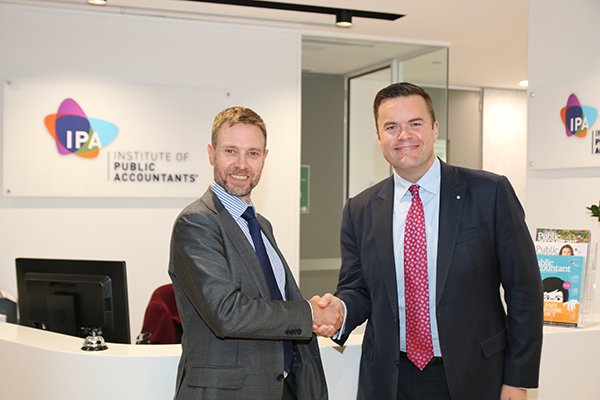
IN THE SPIRIT of educational excellence and collaboration, the Institute of Public Accountants (IPA) and Pearson Asia Pacific have signed a memorandum of understanding (MoU) at IPA’s headquarters in Melbourne to recognise BTEC Business students and graduates as IPA members.

“Through this MoU, we seek to form a strong bond with Pearson to deliver new education standards and support to accounting graduates in the region, so they may grow and prosper in their chosen professional career path,” IPA chief executive officer, Andrew Conway said.

Pearson is a world-learning company which awards globally recognised academic and vocational qualifications as part of a range of offerings from online course development for higher education, to learning and development resources for corporations. 

“Pearson is delighted to partner with the Institute of Public Accountants. Like us, the IPA understand the importance of students needing high standards of both knowledge, and practical skills to kick start their career,” Pearson Asia Pacific chief financial officer David Lyons said.

“Ninety percent of BTEC graduates are employed full time after graduating. And Pearson BTEC Level 5 Higher National Diploma in Business (Accounting and Finance) is the perfect passport to a fulfilling career in almost any sector.”

Mr Conway said, “The MoU will provide graduates of Pearson Education South Asia’s accredited accounting program, with a pathway to IPA membership and access to the Institute’s professional program; a Master of Business Administration. Together, we will continue to raise the bar for education standards across the profession and across the region.”


About the Institute of Public Accountants

The IPA, formed in 1923, is one of Australia’s three legally recognised professional accounting bodies. With the acquisition of the Institute of Financial Accountants in the UK, the IPA Group was formed, with more than 42,000 members and students in over 80 countries. The IPA Group is the largest SME focused accountancy organisation in the world. www.publicaccountants.org.au

About Pearson


More than 20,000 Pearson employees deliver products and services in nearly 200 countries, all working towards a common purpose – to help everyone achieve their potential through learning. Pearson p[rovides high quality, digital content and learning experiences, as well as assessments and qualifications that help people build their skills and grow with the world around them. www.pearsonplc.com


ends

A no brainer: expanding self education tax deductions

THE Institute of Public Accountants (IPA) is hopeful the Federal Government will pull the trigger on last year’s Federal Budget proposal to proceed with expanding self-education deductions.

“Our tax system inhibits rather than incentivises reskilling and retraining. Education expenses that do not have a sufficient connection to an individual’s current employment are currently not deductible,” IPA chief executive officer, Andrew Conwaysaid.

“The disruption caused by globalisation, technology, intergenerational forces, the changing nature of work and the labour market are driving the need for continued upgrading of skills throughout life.

“Upskilling and further education is an investment in human capital that adds to the economy’s productive capacity and can play a key part of our post COVID recovery.

“Those who have the financial capacity to invest in themselves should be encouraged to do so particularly in a post-pandemic environment where jobs have been displaced and overseas immigration of skilled labour has been curtailed.

“The government is proceeding with its proposal to exempt employers from fringe benefits tax if they provide retraining and reskilling benefits to redundant, or soon-to-be-redundant, employees where the benefit may not relate to their current employment," Mr Conway said.

“To provide equity with individuals who have employer support for reskilling or retraining, it is important to extend a similar tax concession to individuals who undertake further education at their own cost.

“As part of the proposal to extend the self-education tax deduction, the IPA supports the inclusion of appropriate integrity provisions to ensure taxpayers don’t take advantage of the tax system by engaging in lifestyle pursuits at the taxpayers’ expense.

“A shared risk approach where the taxpayer bears some of the cost of education, particularly in cases where the retraining does not result in a change or advancement of career, is warranted,” Mr Conway said.


About the Institute of Public Accountants

The IPA, formed in 1923, is one of Australia’s three legally recognised professional accounting bodies. With the acquisition of the Institute of Financial Accountants in the UK, the IPA Group was formed, with more than 40,000 members and students in over 80 countries. The IPA Group is the largest SME focused accountancy organisation in the world.  www.publicaccountants.org.au


ends

WhyCubed formula adds up for business growth

By Leon Gettler >>

BILL MCLELLAN is in the business of building better teams and management systems through a methodology assessing strengths and weaknesses and developing emotional intelligence

His business, WhyCubed, rolls the same methodology that has seen the Western Bulldogs win the AFL premiership into businesses.

“It invigorates businesses by injecting a dimension that normally doesn’t exist – and that is, rather than doing a one or two day immersion session with people, you do it over the course of an hour or so a week,” Mr McLellan told Talking Business.

“The beauty of that, in this current environment, is that’s what most leaders and people trying to manage disparate teams are trying to do, so it’s very timely.” 

The methodology is underpinned by behavioural analytics of Harrison Assessments which, in 20 minutes, seeks to assess 175 traits assessing how people like to work, their likes and dislikes. It also seeks to build levels of emotional intelligence or EQ and examines how people respond under pressure.

“Based on that appetite, you are able to work out what a person is likely to be good at,” he said

IDENTIFYING WEAKNESSES

It also identifies traits and patterns that people are not that good at so they can work out how to attend to it, by getting help or modifying their behaviour.

This helps identify limitations and develops strategic acumen and communication skills.

Mr McLellan said this is now used by businesses globally to develop their talent management systems.

“Most people have accounting systems but how many people actually keep tabs on how their people are progressing from an emotional or EQ standpoint,” he said.

 “You get almost an x-ray report on how people show up. Once you know that, you can then start to coach, augment and facilitate a higher way of being as an individual.

‘It is also a way of building teams,” he said.

“You can super-impose the way individuals show up together. You could for example look at an executive team or a leadership and say: ‘Guys in terms of your strategic paradox, you are all risk takers and none of you are analysing the pitfalls. You are inherently going to take on too much risk. How can we change that? Do we bring in a risk advisor whenever we have a board meeting?’

“The reverse is true too. If the entire team is pre-dispositioned to analysing pitfalls ad nauseam, they might never be able to make a decision and take on new initiatives and the business will start to atrophy.

“You can almost start to do a due diligence on a team. It’s really powerful.”

Mr McLellan said individuals in teams needed to be aware of what areas needed improvement, where the limitations are and what is needed to fix it.

He said it was no different to a football team where it was decided to bring in a kicking coach to teach them the right techniques.

Using analytics is the way to create change and build better leadership teams, he said.

www.whycubed.com.au

www.leongettler.com 


Hear the complete interview and catch up with other topical business news on Leon Gettler’s Talking Business podcast, released every Friday at www.acast.com/talkingbusiness


ends

Engineers top the 2020 Employer Satisfaction Survey, again

AUSTRALIAN bosses have named engineering graduates as the best for the second year running.

The Australian Government's Quality Indicators for Learning and Teaching (QILT) Employer Satisfaction Survey found employers' overall satisfaction level with engineering graduates was at 90.7 percent.

The survey, funded by the Federal Government, looked at the quality of education provided at Australian institutions by asking the employers of new graduates about the generic skills, technical skills and work readiness of the graduate.

Engineers Australia CEO Dr Bronwyn Evans said the excellent result reflected the emphasis institutions put on preparing students for their transition from university to work, and its close links with industry. 

“Increasingly, the 35 university members of the Australian Council of Deans (ACED)  have adopted project-based learning and increased attention to students' collaboration and communication skills. Engineering faculties and schools also have industry advisory committees that assist in ensuring that the programs are delivering to industry's current and prospective expectations,” Dr Evans said.

Professor Ian Burnett, president of ACED and executive dean of Engineering and IT at the University of Technology Sydney, said it was pleasing to see Engineering and Related Technologies at the top of the ratings once again.

“This excellent outcome is a tribute to the graduates and their teachers and rewards the level of industry engagement and the development of authentic technical and professional skills within our engineering degrees," Prof. Burnett said. 

"Many of the projects undertaken by students are linked to industry.  Students are required to gain industry experience and reflect on this using the graduate competency framework of the professional accreditation process operated by Engineers Australia, with whom ACED works closely,”.

The report follows on from the Graduate Outcomes Survey conducted last year, which found 84.4 percent of last year's engineering graduates found full-time employment, 12percent higher than for all graduates of undergraduate programs, and with median remuneration highest of all fields after medicine and dentistry, with women engineers earning slightly more than their male peers.

“An engineering degree is a platform for lifelong learning. Engineers possess complex problem-solving skills that are useful in a range of business contexts, not just technology, making them desirable and valuable employees,” Dr Evans said.

ends

AIIA Skills Hub launch boosts Australia’s ICT industry

THE Australian Information Industry Association (AIIA) has launched the AIIA Skills Hub to create a digital skills platform that connects ICT training needs of industry and employees with vocational education and training (VET), tertiary and industry digital courses.

According to AIIA research, CEO Ron Gauci said, Australia has long had a digital skills gap and the AIIA Skills Hub seeks to fill that gap by mapping employee skills to career pathways and relevant training courses “as well as being the hub for digital badging for micro credentialing courses and repository for digital badges and accreditation”.

The AIIA Skills Hub has been built to support two AIIA industry and QUT co-designed micro-credentialing courses on cyber security and innovation in IT, but will also provide a central place where any VET or tertiary courses can be plugged in to the Hub, where employees can map their skills gap and identify appropriate courses to meet their future career needs.

The AIIA Skills Hub has launched with initial courses from QUT, CQU, QLD TAFE, and Microsoft.

“These courses will be built out with our other educational institutional members as a priority that will be mapped against the global Skills Frameworks for the Information Age (SFIA), an industry skills framework used by major Australian digital employers,” Mr Gauci said. 

Minister for Employment, Skills, Small and Family Business, Senator Michaelia Cash, said digital skills are in high demand across the country and will form an essential part of Australia’s future economy. 

“The Morrison Government is committed to upskilling and reskilling Australians, as we come out of COVID-19, with a record investment of almost $7 billion in vocational education and training this year,” Ms Cash said.  

“The launch of the AIIA Skills Hub is a great example of industry partnering with quality training providers to grow Australia’s ICT skills capabilities and the skills necessary for a modern digital economy,” the Minister said.

AIIA CEO, Ron Gauci, said, “We’re proud to provide further opportunities for AIIA members to develop their skills and continue to be highly valued employees across industries. Working with QUT and the SkillsLogiQ platform, the AIIA has been able to deliver a great platform for our members that will provide additional capability to grow skills and ensure Australia’s ICT workers will continue to be world class.

“Through this initiative, the AIIA is encouraging the growth of strong domestic skills and innovation ecosystem to support a globally competitive economy while the step change to digital transformation occurs,” Mr Gauci said.

“In a post-COVID economy, we know that strong skills in the ICT sector will continue to be highly sought after by employers.

“We’ve seen during the COVID pandemic the adoption of digital services expand at a rate that was expected to take many years. These are changes that will be permanent and will shape the Australian economy for years to come,” Mr Gauci said.

Individuals will be able to create a Skills Passport to map and manage their skills for career development. Queensland University of Technology (QUT), Queensland TAFE and NSW TAFE will provide high quality short courses.

Industry experts including Microsoft, LinkedIn and GITHub will provide free ICT specialist training. In turn, this program will help educators to provide employer relevant programs for Australian ICT students, Mr Gauci said.

The Skills Hub has been created based on the SkillsLogiQ platform. The program will help individuals plan skills development and career pathways and provide a ‘learning academy’ to support ongoing career development. Australia’s leading universities and TAFEs will be able to join the program and offer their short courses to AIIA members around Australia. 

The AIIA is a not-for-profit organisation aimed at fuelling Australia’s future social and economic prosperity through technology innovation.

www.aiia.com.au 


Skills Hub video overview: https://youtu.be/TVrc7Yi0d20

How members will access their skills passport: https://youtu.be/-XPVngYL2aM

ends