 How to resolve AdBlock issue?
 Far north Qld conservationists fight hard to save rare mahogany gliders
By Wildlife Queensland writers >>
ONLY 1,500 to 2,000 mahogany gliders are thought to remain in the wild.
Found nowhere else on Earth, this endangered gliding possum lives in a narrow band of coastal woodland in far north Queensland, between the Hull River near Tully and Ollera Creek, south of Ingham.
Quiet, nocturnal and rarely seen, the mahogany glider can move through the night almost unnoticed.
But being hard to see should never mean being easy to forget.
The mahogany glider (Petaurus gracilis) is sometimes known as the “graceful rope dancer”. It moves through the forest by launching from tall trees and gliding on a membrane of skin stretched between its limbs. An average glide is about 20 to 30 metres, although mahogany gliders can travel up to 60m from very tall trees. 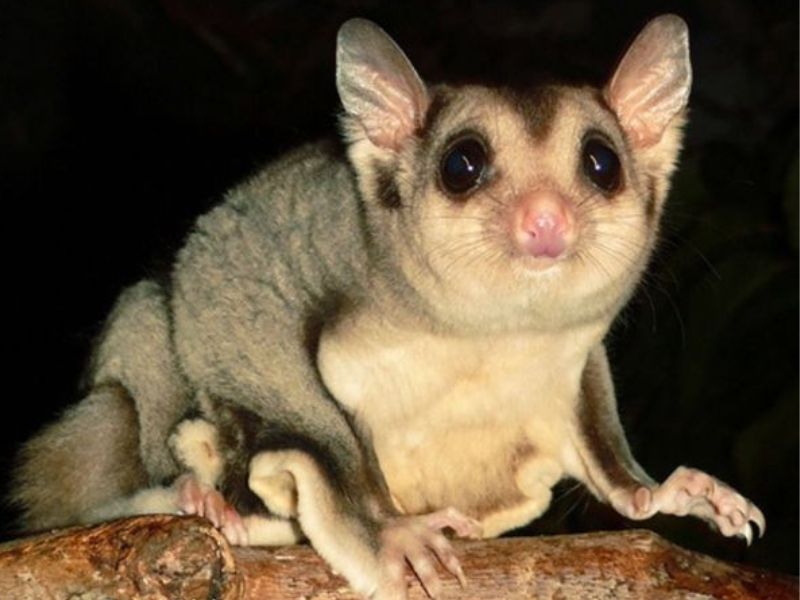
They rarely come to the ground.
For mahogany gliders, trees provide shelter, food, pathways for movement, and family homes. They feed on nectar, pollen, sap, lerps, insects, and wattle arils, moving through their home range in response to seasonal food availability. Each pair may use multiple den hollows throughout the year.
This makes mature trees critical. In the glider’s habitat, trees may take 80 to 100 years to develop hollows large enough to serve as homes. When those trees are removed, they cannot be replaced within a human lifetime.
A species pushed into bush ‘fragments’
The mahogany glider was first recorded by science in 1883, then it effectively disappeared from scientific records for more than a century before being rediscovered in 1989. By then, much of its habitat had already been cleared for agriculture, forestry and coastal development.
Today, the species remains under serious pressure. The National Recovery Plan for the Mahogany Glider identifies habitat loss and fragmentation, inappropriate fire regimes, grazing impacts, weed invasion, small population size, roads and easement corridors, barbed-wire fencing, and extreme weather events as major threats.
For a glider that depends on connected woodland, a gap in the trees is not just empty space. It can be a barrier.
Roads, cleared paddocks, powerline easements, and fences can isolate gliders from food, den trees, and potential mates. When young gliders disperse to find their own territory, they face many risks when habitats are fragmented.
Without safe movement between habitat patches, populations can become smaller, more isolated and more vulnerable over time.
Local action where it matters most
Since the mid-1990s, the Wildlife Preservation Society of Queensland’s Cassowary Coast, Hinchinbrook Branch (Wildlife Queensland for short, a multi-branch volunteer charity founded in 1962) has worked alongside Wildlife Queensland’s Townsville Branch, Terrain NRM and the Mahogany Glider Recovery Team to help protect the endangered mahogany glider from extinction.
Branch members have supported practical recovery efforts, including den boxes, glider pole crossings, habitat restoration, community education and advocacy for wildlife-friendly land management. The branch has also contributed to broader recovery planning, helping ensure local knowledge and on-ground experience inform conservation priorities.
This work matters because recovery is not achieved by a plan sitting on a shelf. It happens when people turn up year after year to monitor habitat, support landholders, raise awareness, install structures, share knowledge, and speak up for a species many Queenslanders have never heard of.
Den boxes can provide shelter where natural hollows are scarce, particularly in recovering or fragmented habitat where mature hollow-bearing trees are limited. Glider poles can help mahogany gliders cross dangerous gaps by providing launch and landing points where canopy connections have been broken.
These actions do not replace intact habitat. Nothing does. But they can reduce immediate risks while longer-term work continues to restore and reconnect the woodland.
For Wildlife Queensland Cassowary Coast, Hinchinbrook Branch president Daryl Dickson, protecting mature trees remains a top priority.
“Every mature tree lost from mahogany glider habitat could mean the loss of a future den, feeding tree or safe pathway through the landscape,” Ms Dickson said. “These gliders cannot wait 80 or 100 years for new hollows to form. If we keep losing old trees, we keep narrowing their chance of survival.”
The branch’s own educational materials sum up the issue simply: every tree matters. Mahogany gliders rely on mature den trees, connected habitat and safe movement pathways. Protecting old trees, planting food and movement trees, avoiding barbed wire and restoring corridors are all practical ways to help. 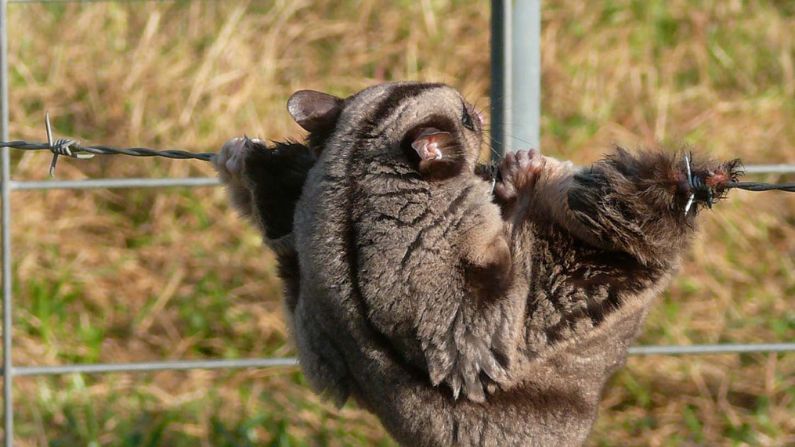
A plan needs people behind it
The mahogany glider has a National Recovery Plan. It has committed local advocates. It states clear threats and practical recovery actions.
What it does not have is time to waste.
Despite its endangered status and tiny remaining population, the mahogany glider receives far less public attention than many better-known threatened species. Yet its future depends on sustained action: protecting remaining habitat, restoring corridors, supporting wildlife-friendly fencing, managing weeds and fire, monitoring populations, and keeping local communities involved.
People can help by writing to their local State or Federal MP to ask them to support stronger protection and recovery action for the mahogany glider. The message can be simple: only about 1,500 to 2,000 mahogany gliders are thought to remain in the wild. They occur nowhere else on Earth, and their survival depends on protecting mature den trees, reconnecting habitat, supporting wildlife-friendly fencing, and funding long-term recovery work.
Wildlife Queensland’s Cassowary Coast, Hinchinbrook Branch has shown what determined local action can achieve over many decades. But volunteer effort cannot do it alone. Threatened species work needs long-term commitment, public support and funding.
Businesses wanting to become involved in assisting Wildlife Queensland to save the rare mahogany glider may contact Wildlife Queensland using details on the website: https://wildlife.org.au
What Queenslanders specifically can do to help
- Queenslanders can speak up for the mahogany glider by writing to the Queensland Minister for the Environment and Tourism and Minister for Science and Innovation, Andrew Powell MP and their local MPs.
- Wildlife Queensland runs appeals such as the EOFY Appeal, Stop the Silent Extinction. Donations help Wildlife Queensland continue the conservation, advocacy and community action needed to protect species like the mahogany glider, before they disappear from the wild and from public attention.
- Read Wildlife Queensland’s Tips to make fencing wildlife-friendly.
- Subscribe to the Talking Wildlife e-bulletin, to learn more about local wildlife, plus Wildlife Queensland’s latest news and offers.
ends