
 How to resolve AdBlock issue?
‘Why pushing harder kills deals’ – take it from Jeff Purser
By Jeff Purser >>
I’VE TALKED MYSELF out of deals before. I didn't know I was doing it at the time, obviously. At the time I thought I was being incredibly persuasive.
The meeting was going well, the client was engaged, and I could feel the idea starting to land, so I did what I thought a good salesperson was supposed to do. I kept selling. 
I’d add another benefit, tell another story or pull out one more example to really nail the point. If there was a silence, I’d fill it. If someone looked uncertain, I’d explain something.
Looking back, I must have been exhausting, but the odd thing is that I genuinely thought more effort meant more persuasion. I reckon a lot of us still believe that. If someone isn’t convinced, try harder. If the deal is slowing down, create more momentum. If there’s hesitation, give them another reason to say yes.
It sounds logical until you’re on the receiving end of it. We’ve all sat opposite someone who keeps talking long after they’ve made their point. You understood them five minutes ago, but they continue explaining. Then they answer an objection you hadn’t thought of.
Now you are thinking about it. A few minutes later you’re wondering why they’re trying so hard and whether there’s something you’ve missed. Confidence has somehow turned into pressure without anyone noticing exactly when it happened.
Don’t fill the silence with more talk
I think this happens a lot in business because silence makes people nervous – particularly salespeople. We like movement because movement feels like progress. A conversation slows down and there’s an almost physical urge to get it going again.
I’ve watched very experienced leaders do exactly the same thing in boardrooms. The proposal is clear, people are nodding, and someone leans back to think for a moment. Instead of letting them think, the presenter jumps back in with, “Just one other thing ...”
You can almost feel the room reopen. A small issue nobody was particularly concerned about gets mentioned, someone asks a question and another person adds something. Ten minutes later, the idea that seemed settled is somehow back on trial. Nothing about the proposal changed. The confidence around it did. 
Obama is never afraid to pause
Barack Obama has always interested me in this regard. Forget the politics for a moment and watch the way he speaks. He rarely seems frightened of a pause. Most people rush through silence as though they’ve forgotten their lines, whereas Obama often appeared happy to let it sit there, sometimes for longer than you’d expect.
I think he understood that a pause isn’t necessarily empty. It gives people time to catch up with what they’ve just heard.
That's a skill I’ve had to learn because it doesn’t come naturally to me. I’m a talker. I’ve made a career out of communicating and, like most people who are reasonably good at something, I’ve occasionally assumed more of it must be better.
In negotiations, though, I’ve noticed the strongest people often say less than you expect. They make their point, answer the question they’ve actually been asked and then stop. Not in some ridiculous sales-training power move where everyone silently counts to seven. They just seem comfortable allowing the conversation to breathe.
There’s an important difference between using silence and performing silence. People can feel the second one a mile away.
I reckon the mistake I made earlier in my career was confusing momentum with progress. If a meeting was energetic, I thought it was going well. If people were talking and ideas were flying around, fantastic. We were moving.
Yet some of the best decisions I’ve been involved in have happened when the room became quieter, and that’s taken me longer than it probably should have to understand.
Decisions happen after the argument is finished
Decisions aren’t usually made while someone else is talking. That’s probably too absolute. Actually, let me put it differently. The final part of a decision often happens after the argument has finished. Someone needs a moment to turn the idea over, test it against their own experience and decide whether it feels right to them. You can’t do that part for them.
This is where persuasion becomes slightly counterintuitive. The closer someone gets to a decision, the less helpful your persuasion can become. The thing that got them there can actually start getting in the way.
It’s a bit like walking someone to their front door and then insisting on following them into the house. At some point, the final step belongs to them.
Looking back, I’ve lost more ground by talking too much than I ever did by saying too little. I still catch myself doing it. A meeting goes well, I get excited about the idea and somewhere in my head a voice says, “Jeff, you’ve got them. Now give them three more reasons.”
I’m getting better at ignoring him, although probably not as quickly as the people who’ve sat through meetings with me would like.
Maybe the best persuaders aren’t the people who always know exactly what to say. They may simply be better at recognising when they’ve already said enough. 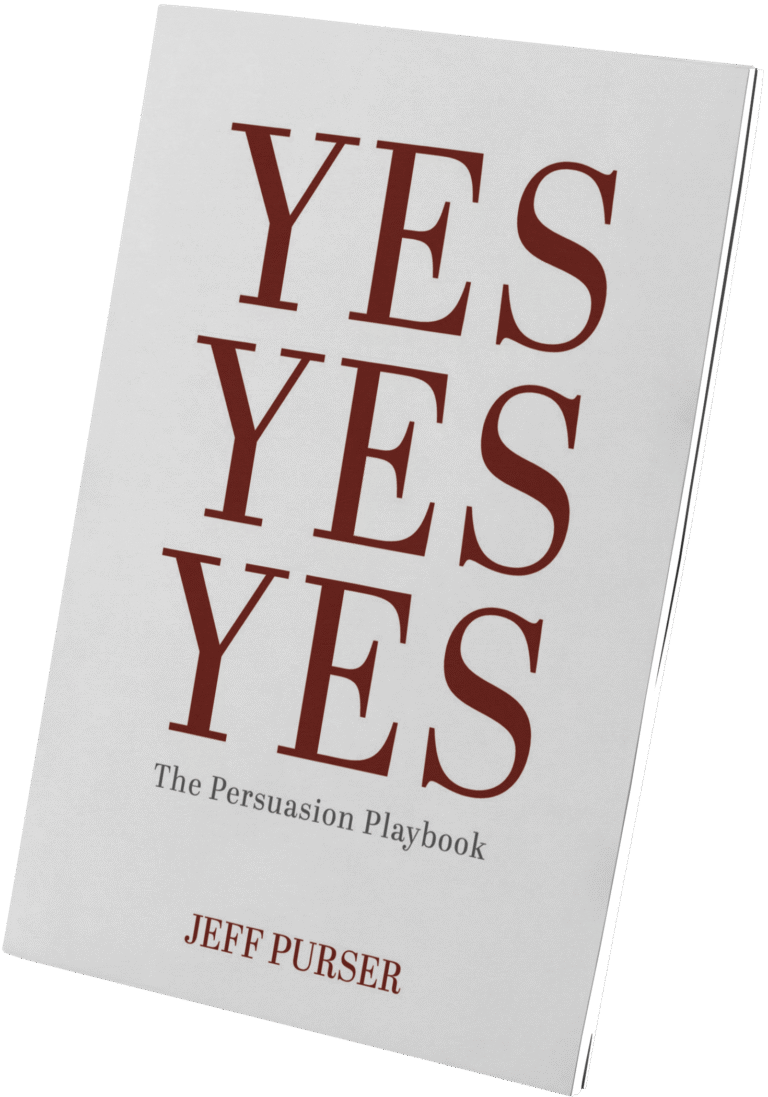
ABOUT THE AUTHOR
Jeff Purser is a communications strategist and commercial director with more than two decades of experience across sport, media and entertainment. His career includes senior roles connected to the Olympic Games, the South Sydney Rabbitohs and Optus Television. He has produced feature films including Fat Pizza and Cedar Boys and advised senior executives within major media organisations. He is the author of Yes Yes Yes: The Playbook of Persuasion, now available on Amazon. Turn to Research and Books for a preview of Yes Yes Yes: The Playbook of Persuasion.
ends