2025 My First Speech winners come to Canberra

THE winners of the My First Speech competition will be visiting Canberra next week to have their say.

The competition asks secondary school students to imagine themselves as a newly elected Member of the House of Representatives and to write a 90 second or 300-word speech about an issue they are passionate about.

The judges for the 2025 competition were the Speaker of the House, Milton Dick MP, the Member for Bass, Jess Teesdale MP, the Member for Hinkler, David Batt MP and the Member for Fowler, Dai Le MP.

This year’s winning speeches were about better access to physical and mental health care in regional areas, organ donation and holistic education. The winners will travel to Canberra to deliver their speeches live at an award ceremony in Parliament House on Wednesday (November 26) to be hosted by the Speaker.

"The My First Speech Competition is a fantastic way for our future leaders to get involved in democracy and speak about the issues that are important to them," Speaker Milton Dick said.

"It is so important that we continue to look for these opportunities to give our young Australians the opportunity to engage with our Parliament. Hearing their voices and views is the sign of a vibrant and healthy democracy – something I am so passionate about."

Video footage of the winners’ speeches will be available on the House of Representatives YouTube channel after the ceremony.

Event details

My First Speech event
Wednesday 26 November, 12pm to 12.45pm
Presiding Officers Exhibition Area,1st floor public area (near the post office)
Parliament House, Canberra.


ends

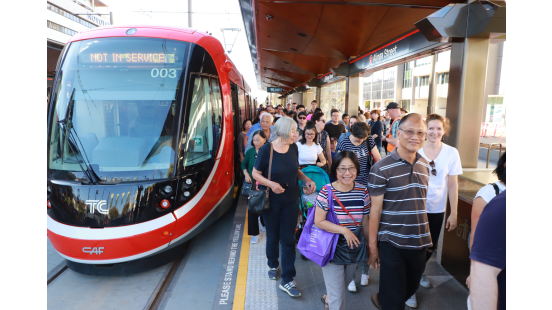
Canberra Metro group to build and operate Canberra Light Rail Stage 2A

CIMIC GROUP companies Pacific Partnerships, CPB Contractors and UGL, as part of the Canberra Metro consortium, will finance, design, build and operate the next stage of Canberra’s ‘world class’ light rail system, dubbed Stage 2A, from the city to Commonwealth Park.

The Canberra Light Rail Stage 2A project is jointly funded by the Federal Government and the Australian Capital Territory (ACT) Government. Canberra Metro was awarded the $577 million contract following a single select procurement process, generating revenue of about $227.5 million for CPB Contractors and UGL.

The Stage 2A ‘catenary free’ – or wireless – extension will be delivered under Canberra Metro’s existing public private partnership (PPP) with the ACT Government. 

“The commitment made today in signing this contract represents a significant investment in Canberra by both governments,” ACT Chief Minister, Andrew Barr said. “It is an example of how the National Capital Investment Framework will result in ongoing investment in our infrastructure.”

This is the third Canberra Light Rail package for Canberra Metro, which includes CIMIC’s Pacific Partnerships (sponsor and equity funding), CPB Contractors (design and construction) and UGL (operations and maintenance).

Following on from the initial Stage 1 of the network (city to Gungahlin), Canberra Metro is currently delivering five additional light rail vehicles with onboard energy storage batteries to allow wireless operation, and an expansion of the existing depot.

The project is the next important step in taking light rail all the way to Woden. Canberra Metro funded the PPP finance contribution for the new Stage 2A 1.7km extension through an innovative green loan that recognises the project’s carbon reduction benefits – with Stage 1 operating on 100 percent renewable electricity.

The design and construction scope of work includes delivery of three new stops at Edinburgh Avenue, City South and Commonwealth Avenue, with construction due to start in January 2024 for a four-year duration.

“Canberra Light Rail’s progressive stages are modernising the city’s public transport system, connecting residential areas with employment centres and social and cultural hubs,” CIMIC Group executive chairman Juan Santamaria said. “We are proud to apply the group’s light rail expertise to deliver a convenient and environmentally friendly transport option for Canberrans.”

Pacific Partnerships managing director Simon Nicholls said: “Having been personally involved since the start of Stage 1, I am very pleased that our enduring partnership with the Federal and ACT Governments and Canberra Metro will continue to successfully connect Canberra.

“Our lifecycle approach within the PPP model has proven highly successful. Canberra Metro has mobilised a sustainable finance solution, a reliable delivery contractor and the experienced operations team necessary for a long-term light rail service focused on serving community needs.”

CPB Contractors managing director Jason Spears said: “CPB Contractors is delighted to continue our work to deliver the Canberra Light Rail, which will improve the everyday lives of residents and attract more visitors to the city.

“We are proud to leverage our 70-year history in delivering transformational rail projects across Australia, while we continue to ensure we are maximising training and job opportunities for local people and economic prospects for local suppliers.” Mr Spears was referring to two of the heritage companies of CPB Contractors, Leighton and Thiess.

UGL managing director Doug Moss said, “UGL is involved in more than 150 million passenger journeys across Australia and New Zealand each year, which will grow with the addition of Canberra Light Rail Stage 2A.

“Canberrans have embraced Stage 1 since operations started in 2019, with a service frequency reliability of at least 99.9 percent, delivering services every 5-6 minutes in peak and 10-15 minutes in off-peak.”

www.cimic.com.au

ends

Economic opportunities for Traditional Owners considered in Canberra

THE Joint Standing Committee on Northern Australia is holding a public hearing in Canberra on Friday, February 15, 2019, as part of its Inquiry into the Opportunities and Challenges of the Engagement of Traditional Owners in the Economic Development of Northern Australia.

The Committee Chair, Warren Entsch MP, stated that, "The Committee is interested to hear from Federal Government agencies about how Traditional Owners in Northern Australia can be supported to take advantage of economic opportunities. In particular, the Committee will examine the role of representative bodies, government entities, and any legislative, administrative and funding constraints to the economic engagement of Traditional Owners."

The hearing program and further information about the Committee’s inquiry is available on the Committee’s website: www.aph.gov.au/jscna. The hearing will be broadcast live at aph.gov.au/live.  

PUBLIC HEARING DETAILS:

Canberra

9.15am to 11.45am, Friday, February 15, 2019

Committee Room 1R2, Australian Parliament House

ends

First Nations leaders share knowledge and ambition for collaborative climate action in Canberra

TODAY, First Nations-led organisations and climate advocates from across Australia will join a gathering of more than 260 public and private sector leaders from every corner of society at the third Better Futures Forum, running into tomorrow.

The delegation includes Indigenous Peoples’ Organisation Australia co-chair, Uncle Ray Minniecon; sustainable investment specialist and proud Wulli Wulli man, Caleb Adams; ocean and climate activist and proud Kulkalaig woman, Tishiko King; urban designer and proud Woiwurrung and Maneroo Aboriginal man, Christian Hampson;  Gudanji For Country director and Nimiringki (decision maker) from the Karanjini Rrumburriya clan of the Gudanji nation, Rikki Dank; and a Talanoa (dialogue) to discuss climate effects on Pacific nations moderated by 'Alopi Latukefu and Thelma Raman with Pacific Island representatives.

Their message of the day is clear. For 65,000 years Australia’s First Nations peoples have taken care of Country. They have the knowledge and leadership to help Australia and the global community scale-up climate action.

They join delegates from finance to faith, cities and states, businesses large and small, agriculture, resources and energy sectors, health and social services, unions, think tanks, charities, and higher education – to collectively demonstrate how communities, 'from the ground up' are acting faster and with greater climate ambition than the Australian Government.

Better Futures Australia program director, Lisa Cliff said, “As communities around the world come together to address the shared challenge of climate change, First Nations voices offer guidance and solutions rooted in deep respect for land and nature.

“Aboriginal and Torres Strait Islander speakers at the forum will raise their voices to share knowledge and climate ambition of First Nations peoples on critical topics from nature conservation to land use in climate strategy, economic justice and self-determination.”

Ms Cliff said the Better Futures Forum would highlight how communities and sectors across Australia were working hand in hand to co-create climate solutions. 
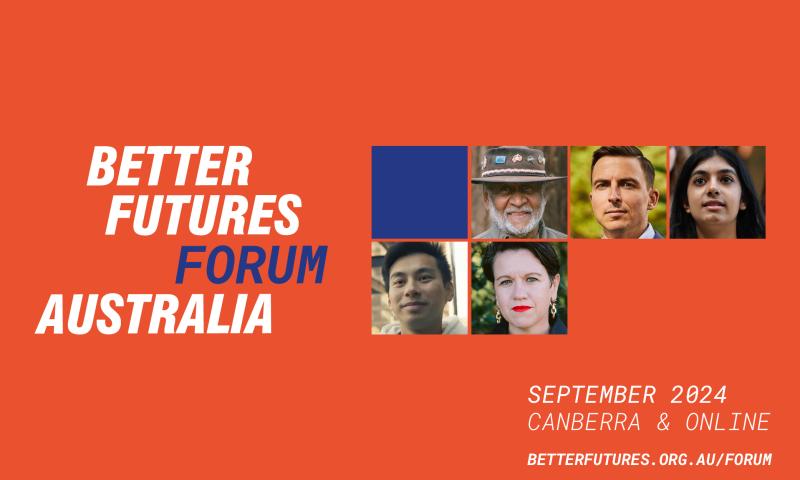
“With Australia’s potential to co-host COP31 in partnership with Pacific neighbours, this is a pivotal moment for collective action,” she said.

Ms Cliff said the United Nations recognises that First Nations people across the world are disproportionately impacted by climate change, which ‘exacerbates the difficulties already faced by vulnerable indigenous communities, including political and economic marginalisation, loss of land and resources, human rights violations, discrimination and unemployment’.

Aboriginal and Torres Strait Islander speakers at the forum include:

Indigenous Peoples’ Organisation Australia co-chair, Uncle Ray Minniecon, is an Aboriginal pastor with ancestral roots in the Kabi Kabi and Gurang Gurang nations of South East Queensland. Pastor Ray is also a descendant of the South Sea Islander people, with connections to the people of Ambrym Island.

On September 11, he will discuss the importance of unlocking public engagement aligned to Action for Climate Empowerment (ACE) adopted by the UN Framework Convention on Climate Change to denote work under Article 12 of the Paris Agreement.

Sustainable investment specialist and proud Wulli Wulli man, Caleb Adams, will join a September 10 session on the need for ‘scale, speed and solidarity’ in driving the policy and investment strategy for a just transition to 100 percent renewables. Mr Adams is associate director of ESG and sustainable investment with E&P Financial Group. He is passionate about channelling capital towards impactful opportunities for Indigenous communities, with a focus on sustainability and climate mitigation.

Mr Adams is also a member of the Australian Sustainable Finance Institute (ASFI) First Nations Reference Group, and a recent contributor to the United Nations Permanent Forum on Indigenous Issues (UNPFII) expert group meeting on ‘Indigenous Peoples in a greening economy’.

Ocean and climate activist, Tishiko King, is a proud Kulkalaig woman from the Island of Masig and Badugal of Themu Clan in the Torres Strait, and also works with the philanthropic sector to redistribute wealth back into First Nations communities for economic justice and self-determination. Ms King features in the acclaimed documentary, Climate Changers, charting scientist Tim Flannery’s global journey to uncover the missing ingredient in the fight against climate change – that is leadership. 
From screen to stage, ‘Tish’ – and Mr Flannery, who is also on the forum lineup – explore the opportunity for Australia in co-hosting COP31 in partnership with Pacific neighbours in a September 11 session that doubles as the launchpad for a joint report by the Smart Energy Council and Climate Council.

Tish will separately join a Talanoa – a traditional word in Fiji and across the Pacific to reflect a process of inclusive, participatory and transparent dialogue – to discuss climate effects on Pacific nations, the relationship between Australia and the Pacific, and work underway to secure a more equitable future under the eyes of COP31 and beyond.

Urban designer and proud Woiwurrung and Maneroo Aboriginal man, Christian Hampson, is CEO and First Nations Design Lead at Yerrabingin – a startup that ‘seeks to disrupt conventional approaches to ending Indigenous disadvantage and create intercultural opportunities for future generations to thrive’.

On September 10, he will bring insights from 30 years’ experience in bio-cultural conservation and collaboration with First Nations communities to Better Futures Forum’s opening session on local initiatives and national climate strategies for building better, equitable futures in Australia. 

Mr Hampson co-founded Yerrabingin to bring First Nations design narratives to the Australian natural and built landscape. For Mr Hampson, Country and its custodians are “active co-designers of the projects we work with through a shared collective voice instead of series of individual representations”.

Gudanji For Country director, Rikki Dank, is a Traditional Owner and Nimiringki (decision maker) from the Karanjini Rrumburriya clan of the Gudanji nation. Ms Dank, who is known by her Country as Lhudi Noralima, is committed to protecting ‘Women’s Country’ on the western side of Gulf of Carpentaria in central Northern Territory. For decades, her family has fought to protect Country from the damaging effects of overgrazing, mining, and fracking. On September 11, she will join a session on nature and land use trade-offs, which showcases practical solutions and opportunities to align land management with Australia’s climate and biodiversity targets, emphasising nature-based solutions and First Nations leadership.

And among dozens of other First Nations attendees is Georgia Griffiths, a proud Aboriginal woman, living and working in Narrm (Melbourne). She is the director of impact at SEED Mob, and passionate about fighting for climate justice and has worked on campaigns that elevate the voices of First Nations communities on the frontlines of gas fracking. She will join the forum’s closing panel, ‘Agents of change: what climate leadership looks like in Australia’ on September 11.

Eduardo Maher, of Yawuru, Jabirr-Jabirr, Bardi-Jawi, and Nyul-Nyul heritage, is the two-way science coordinator for the Kimberley Land Council, a former Yawuru Ranger, and a multidisciplinary artist. On September 11, he will join a Talanoa on Australia’s role in Co-hosting COP31: Partnering with our Pacific Neighbours.

Peter Griffiths-Sebastian, a Yawuru man from his mother’s side from Broome and a Mirriwoong man from his father’s side from Kununurra in the East Kimberley, also joins the Talanoa. He is the proud founder and operator of Pete’s Cultural Adventures, providing ‘cultural fishing tours and on Country adventures’ in the Kimberley.

Of his participation at the forum, Mr Griffiths-Sebastian said, “I am here to represent the East Kimberley on climate change and the effects it has on the East Kimberley.” 

The Better Futures Forum is Australia’s largest multi-sectoral gathering on climate. The third forum at Canberra’s National Film and Sound Archive will showcase significant strides in community-based climate solutions and share insights on scalable solutions in the global race to net zero.

New reports on community energy, export energy, local government and more will be released over the two days.

Full list of speakers at https://www.betterfutures.org.au/full_lineup_2024, and program at https://www.betterfutures.org.au/full_program_2024.

ends

QRC welcomes bipartisan support from Canberra on New Acland jobs

THE Queensland Resources Council has welcomed the bipartisan support from Federal Labor and the LNP for the immediate approval of New Hope’s New Acland mine to stop more Queenslanders from unnecessarily losing their jobs.

QRC chief executive Ian Macfarlane said it was tragic to hear New Hope had been forced into making redundancies when the extension to the mine at Oakey on the Darling Downs had already been approved by Queensland courts.

“The Queensland Government has sat back and allowed lawfare by a small group of green activists to jeopardise the economic recovery of this State by delaying New Acland. This is a shovel-ready project that has dragged through the court system in Queensland for more than a decade and all challenges against it have been dismissed,” Mr Macfarlane said.

“Now the activists have taken the project to the High Court which could delay the start by years more. Queensland needs jobs now and I can tell you these workers and their families need these jobs.

“The State Government is not powerless here. It could step in at any time to approve the mining lease and associated water licence.

“In September, the Premier said the hold up for a decision was to wait for the finalisation of proceedings in the Court of Appeal. The Queensland Court of Appeal has since made its determination which would allow the New Hope expansion to go ahead with the appropriate approvals.

“There’ll be no jobs created by delays in a court room and let’s be clear, at risk here is not just hundreds of New Acland jobs and not just thousands of resources jobs, but the thousands more jobs with all major projects, whether they are wind farms, tourism resorts or other infrastructure.

“There couldn’t be a worse time to stop new jobs in Queensland yet activists are being given the green light to delay and stop any Queensland jobs being created at their political whim.

“The Government has a responsibility, and the mandate, to make decisions in the best interests of all Queenslanders to fact track the economy post-COVID-19.”

www.qrc.org.au

ends

The Select Committee on Nuclear Energy’s public hearing program kicks off in Canberra

THE newly established House Select Committee on Nuclear Energy will kick start its public hearing program in Canberra today. The parliamentary committee has been established to inquire into and report on the consideration of nuclear power generation in Australia.

The committee will hear from Federal Government departments including the Department of Climate Change, Energy, the Environment and Water (DCCEEW); the Department of Industry, Science and Resources (DISR); the Department of Foreign Affairs and Trade (DFAT) and the Department of Defence, and government agencies including the Australia Nuclear Science and Technology Organisation (ANSTO) and the Commonwealth Scientific and Industrial Research Organisation (CSIRO), among others.

Committee Chair, Dan Repacholi MP, the Federal Member for Hunter, said, "The committee is looking forward to opening its public hearing program with a day of ‘scene setting’ evidence from government departments and agencies who play a role in federal nuclear energy policy and legislation in Australia. The committee hopes this will provide an opportunity for a productive discussion of the fundamental issues around nuclear power generation in Australia.”

Mr Repacholi explained the committee intends to hear from communities across Australia that would be impacted by the Opposition’s nuclear energy plan. In the coming weeks and months, the committee will also call on a broad range of experts to explore the financial, environmental, technical, and legal implications of developing nuclear energy in Australia, among other issues.

The hearing can be accessed online. Programs for all hearings and further information about the inquiry,  including the inquiry terms of reference are available on the committee’s website.

The Committee on Nuclear Energy is seeking submissions by Friday, November 15.

Public hearing details

Date: Thursday, 24 October 2024
Time: 9am to 5:15pm (AEDT) (approximately)
Location: Main Committee Room (MCR), Australian Parliament House, Canberra.


ends