
 How to resolve AdBlock issue?
 World Press Photo 2026 captures a year of conflict, loss and endurance
By Ellen Boonstra, Business Acumen’s Asia correspondent >>
FOR MORE THAN SEVEN decades, World Press Photo has defined a global standard for photojournalism, bringing together the stories that shape each year and displaying them around the world. For the next few months, World Press Photo exhibitions can be seen in Australian towns and cities.
Founded in 1955 in the Netherlands, the annual contest has become one of the world’s most influential platforms for documentary photography, attracting thousands of submissions worldwide.
Each edition presents not only major news events, but also how they are experienced on a human level, beyond statistics and headlines.
This year’s competition drew more than 57,000 entries from nearly 3,800 photographers across 141 countries. Together, the images offer a powerful snapshot of a year shaped by political tension, ongoing conflict and social change, from the war in Ukraine and the crisis in Gaza to immigration policy in the US..
World Press Photo executive director Joumana El Zein Khoury described 2025 as “an overwhelming year”, noting the difficulty of processing its scale and complexity for both photographers and audiences.
Photographers typically submit work in December and January, after which regional juries review entries across six geographic areas, including Asia Pacific and Oceania.
The aim is to strengthen contextual understanding and increase global representation, while giving more visibility to locally rooted storytelling.
Stories of power, displacement and survival
This year’s Photo of the Year, Separated by ICE by Carol Guzy, highlights the human consequences of immigration enforcement in the US. 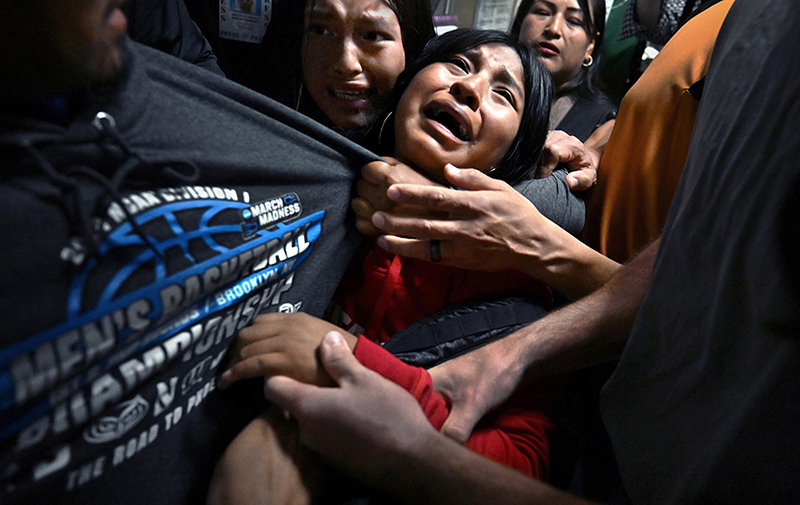
Taken inside a federal building in New York, the photograph shows a father being taken into custody following an immigration court hearing while his wife and children remain behind in visible distress. The stark institutional setting contrasts with the emotional intensity of the moment.
Guzy and a small group of photographers were granted limited access to document the proceedings, returning multiple times. The resulting work reflects not only a single encounter, but also a broader system and its impact on families.
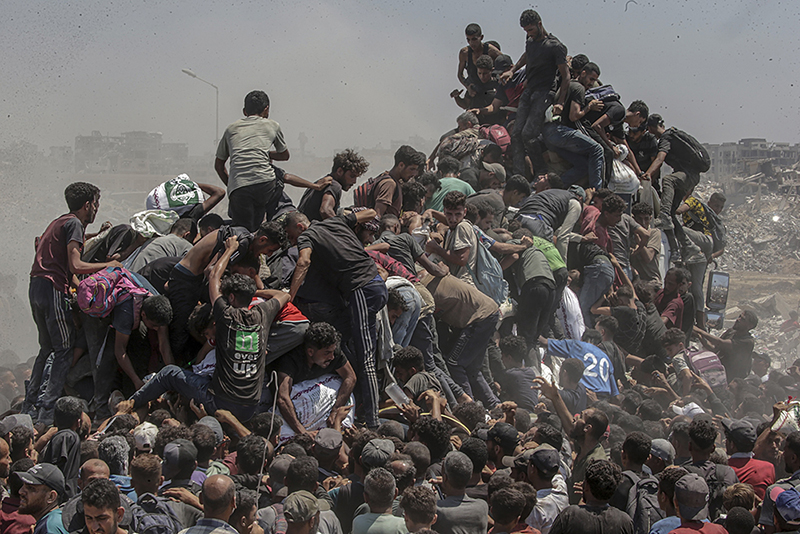
The ongoing crisis in Gaza is reflected in several finalist images, including Aid Emergency in Gaza by Saber Nuraldin, which shows people scrambling onto a truck carrying humanitarian supplies.
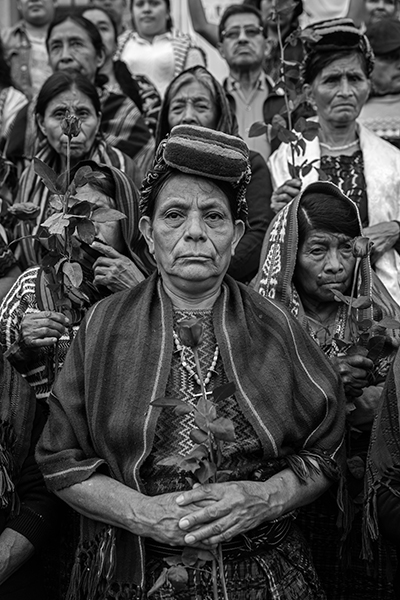
In contrast, The Trials of the Achi Women by Victor J. Blue (below) presents a quieter moment of legal resolution for Indigenous women in Guatemala City, focusing on dignity and endurance rather than conflict itself.
A wider lens on global change
Together, the selection points to a broader shift in focus across this year’s contest, with photographs centred less on events alone and more on lived experience.
Global jury chair Kira Pollack noted the range of approaches, from breaking news photography to long-term documentary work, unified by an effort to reveal stories that might otherwise go unseen.
The regional judging system is particularly visible in Asia Pacific, where participation continues to grow. The region’s selections span environmental change, cultural tradition and scientific collaboration, including a rare camera-trap image of a wild panda captured after years of fieldwork.
Climate and everyday resilience
One of the most striking winning images is Bondi Beach Terror Attack by Edwina Pickles of The Sydney Morning Herald (below).
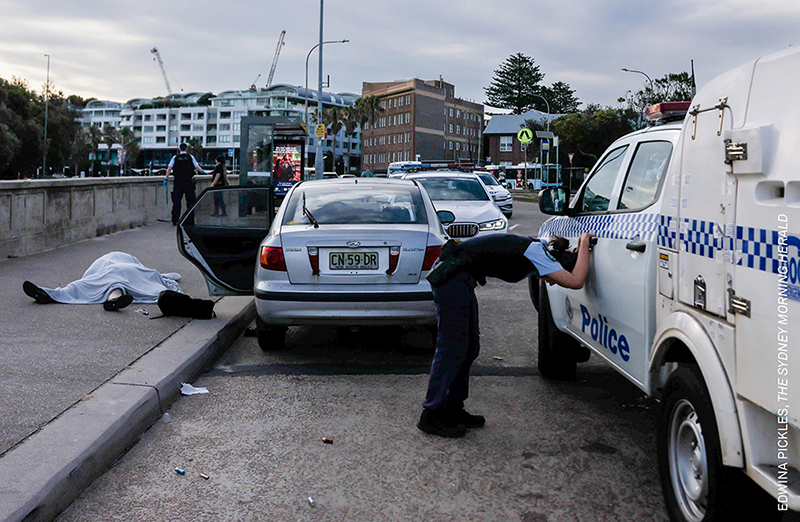
Taken in the aftermath of an attack during the Chanukah by the Sea event in Sydney, the photograph shows an emotionally overwhelmed police officer near the bodies of victims Boris and Sofia Gurman. The image was recognised for its emotional intensity and its powerful depiction of both chaos and human cost.
Australia is also represented in The Last Dolphin Hunters, a project by Australian photographer Matthew Abbott, working with Oculi for The New York Times.
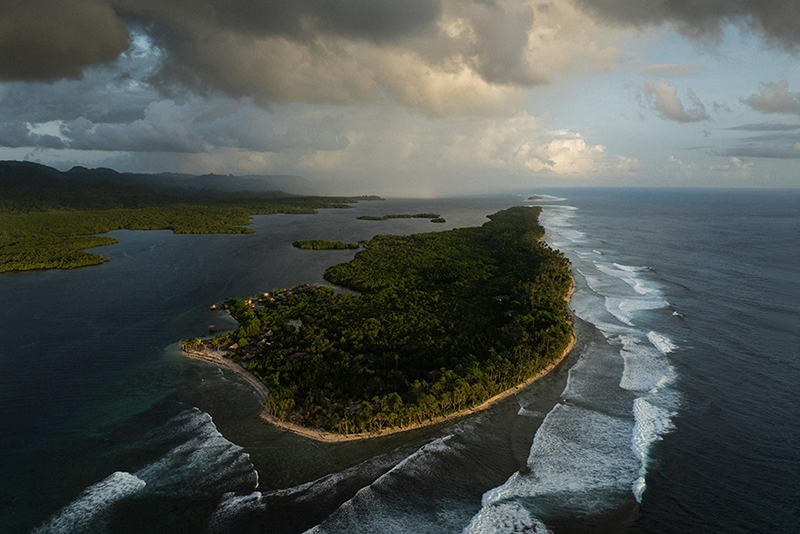
The work explores traditional dolphin hunting practices in Indonesia and the complex relationship between coastal communities and the sea, where subsistence, cultural tradition and ethical debate intersect. It stands out for its restrained yet confronting perspective on a practice that remains at the centre of global conversations around conservation, heritage and survival.
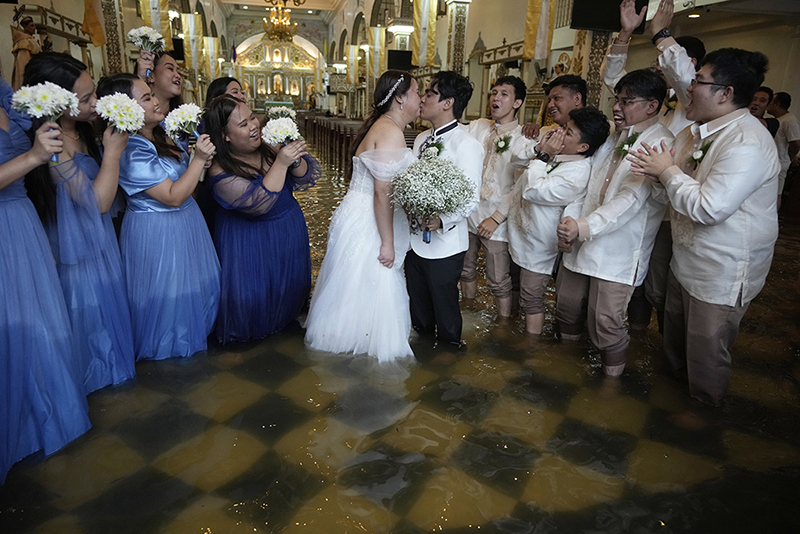
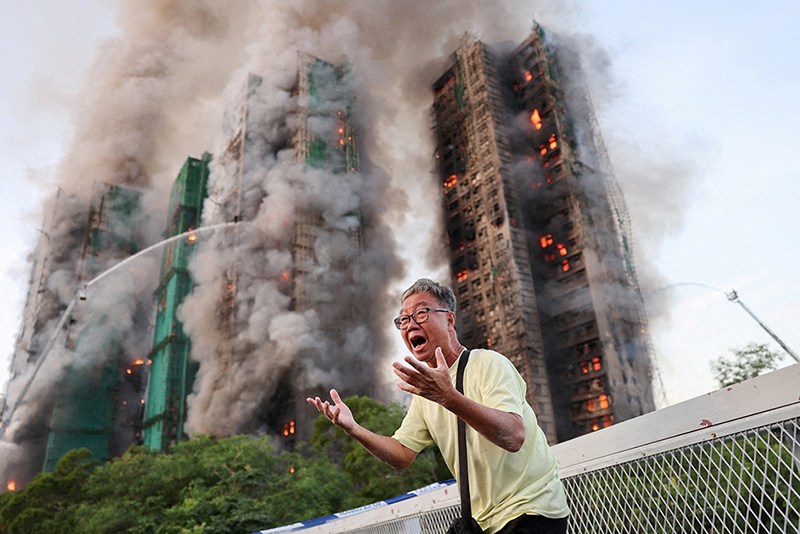
In Wedding in the Flood, Aaron Favila shows a couple continuing their ceremony in rising floodwaters in the Philippines, while A Desperate Plea by Tyrone Siu captures a moment of personal loss during a building fire in Hong Kong.
On tour in Australia
Following the announcement of the winners, the images have been travelling as part of a global exhibition, which began in Amsterdam and is continuing to more than 60 cities worldwide, most recently at the Brisbane Powerhouse in June and now in Sydney at the State Library of NSW until July 19; Ballarat is the location for regional Victoria’s first showing of the contest from August 8 to September 20, hosted by the Art Gallery of Ballarat at the Mining Exchange.
Writer Ellen Boonstra is Business Acumen magazine’s roaming Asia correspondent.
ends